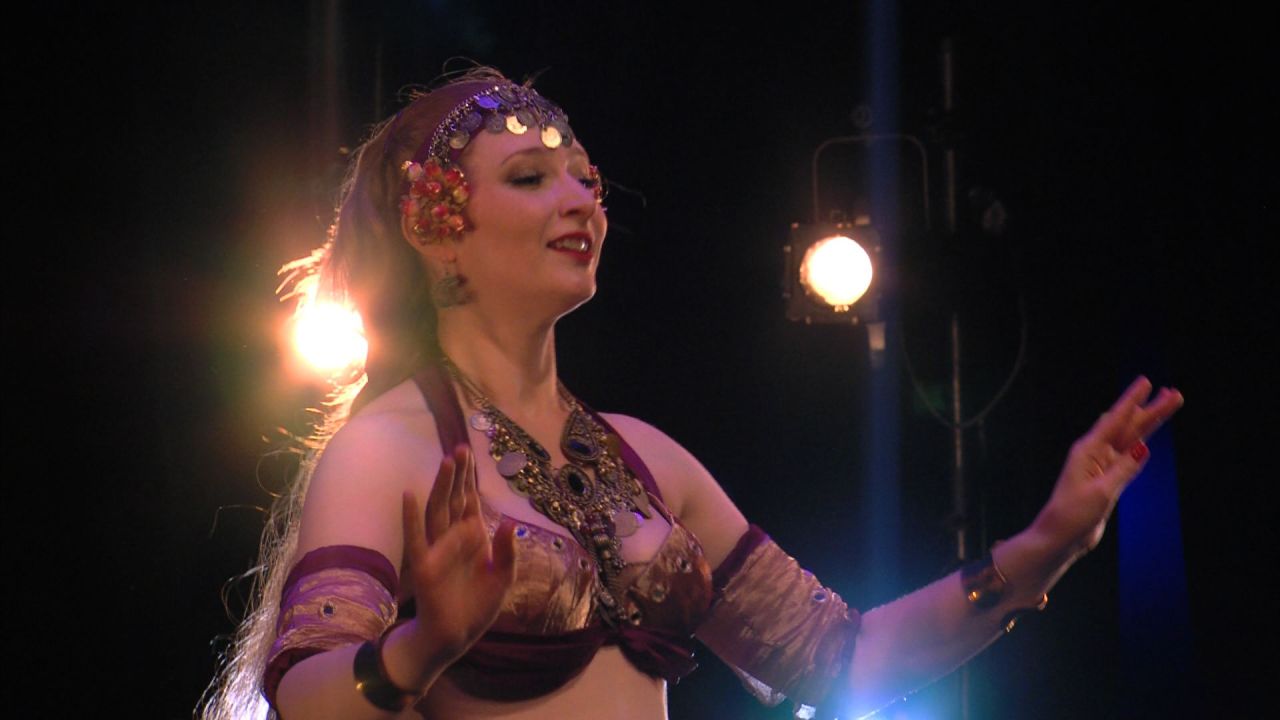
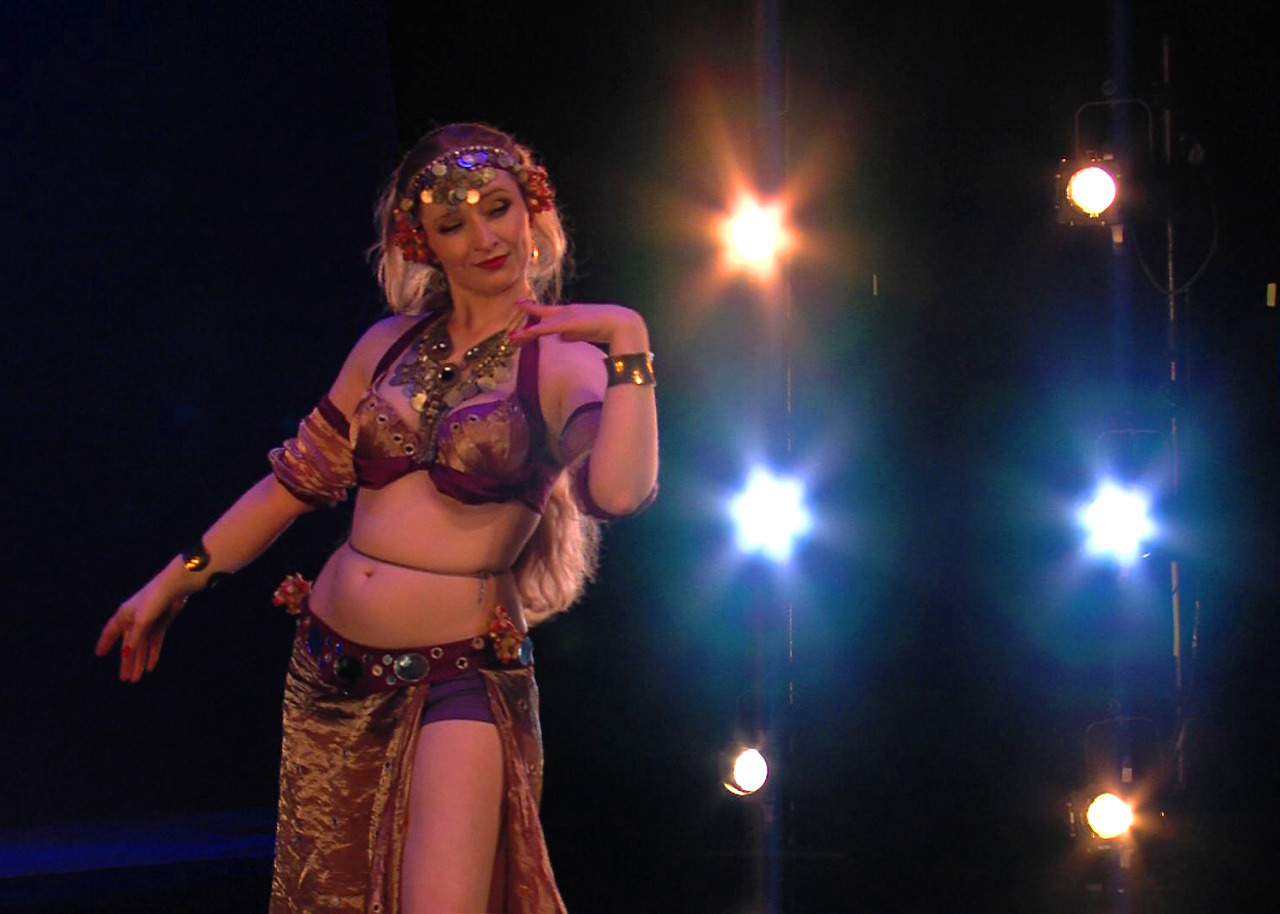
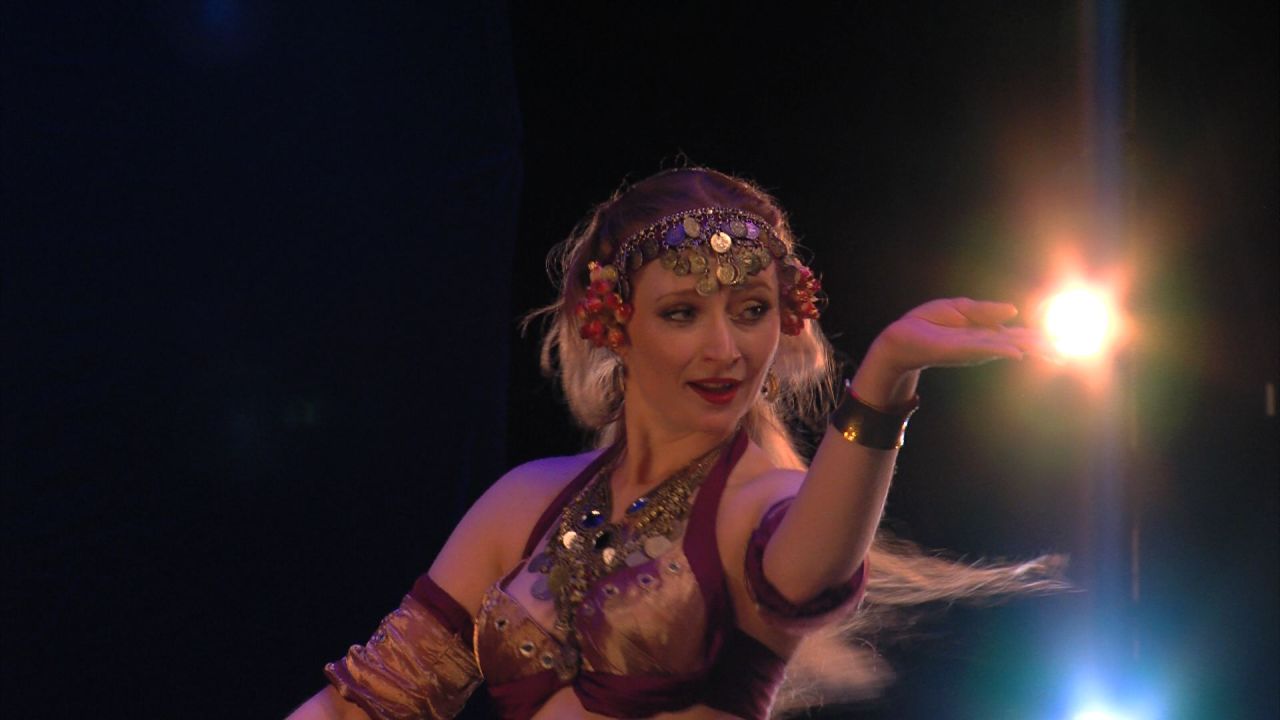
The online studio is open! Take class via streaming video on any device. AutumnWard.vhx.tv
For Study Guides, "Zeina" info, and other resources for students and teachers, click through to dancesmarter.blogspot.com

Sunday, March 15, 2015

Dreams

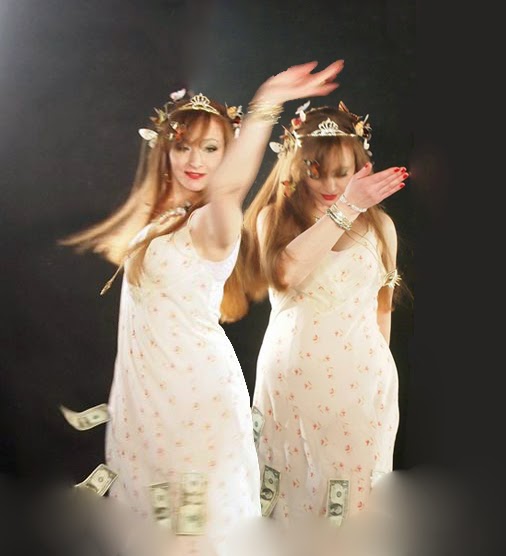
Hey!  Look at that!  Look at that pretty girl with all that pretty jewelry.  Look at that crown.  She must be a pretty pretty princess. Yay princess!

Despite living in a notional republic, we in the United States swoon for inherited entitlement. Sort of. We're a bit conflicted about the more authoritative title, "queen."  But "princess?" Yay! Exclamation point!


So I guess there's a sweet dream and a nightmare depicted here, right?  That seems pretty straightforward, so I'm mostly not bothering with a contextual breakdown on this.  Who needs context when there are sparkles?  But just in case anyone is wondering...

Part One:  The American Dream
For Part 1, you're mostly on your own.  Except I will throw a bone to the botanically-challenged. Those flowers are poppies.  Not that the poppies featured in this video were grown in Afghanistan or used to make opium, or, even worse, heroin.  No doubt they were legally cultivated for Oxycontin, or for Armistice Day oops no wait we don't observe that anymore I mean Veterans Day, or just for a lovely floral centerpiece.  Also, check out that beautiful engagement ring.  I hope she settled for nothing less than DeBeers.  You go girl.  Shine bright like a diamond.


Part Two:  Lucid
For Part 2, you might start with the 8-pointed star.  Consider that it may be interpreted as a symbol of Ishtar or Venus, as the wheel of the year, or as a symbol of regeneration.  Or consider it as a symbol of chaos magic. As a side exploration, belly dance enthusiasts (possibly depending on whether or not they consider the dance in this clip to be "belly dance") may from there find it rewarding to ponder chaos as it is understood as "fitna."

Ewww!  Look at all of those slimy elemental creepy crawlies.  They are freaking me out. But look at how they sparkle.  But, I don't know, that pretty girl looks a little scary.  This is weird.  I am confused.

Other than people making cryptic videos, are other adults buying multicolor rhinestone frog and sparkle crustacean bracelets?  The existence of said items leads me to believe that there are other events and venues appropriate to such baubles. How do I more fully insinuate myself into the invertebrate bling lifestyle? Wait a minute, is this part of Part One? 


Bad bellydancer. Bad. Bad. Bad. Are we in part one or in part two? What are we loathing again? Am I awake? I am so confused.

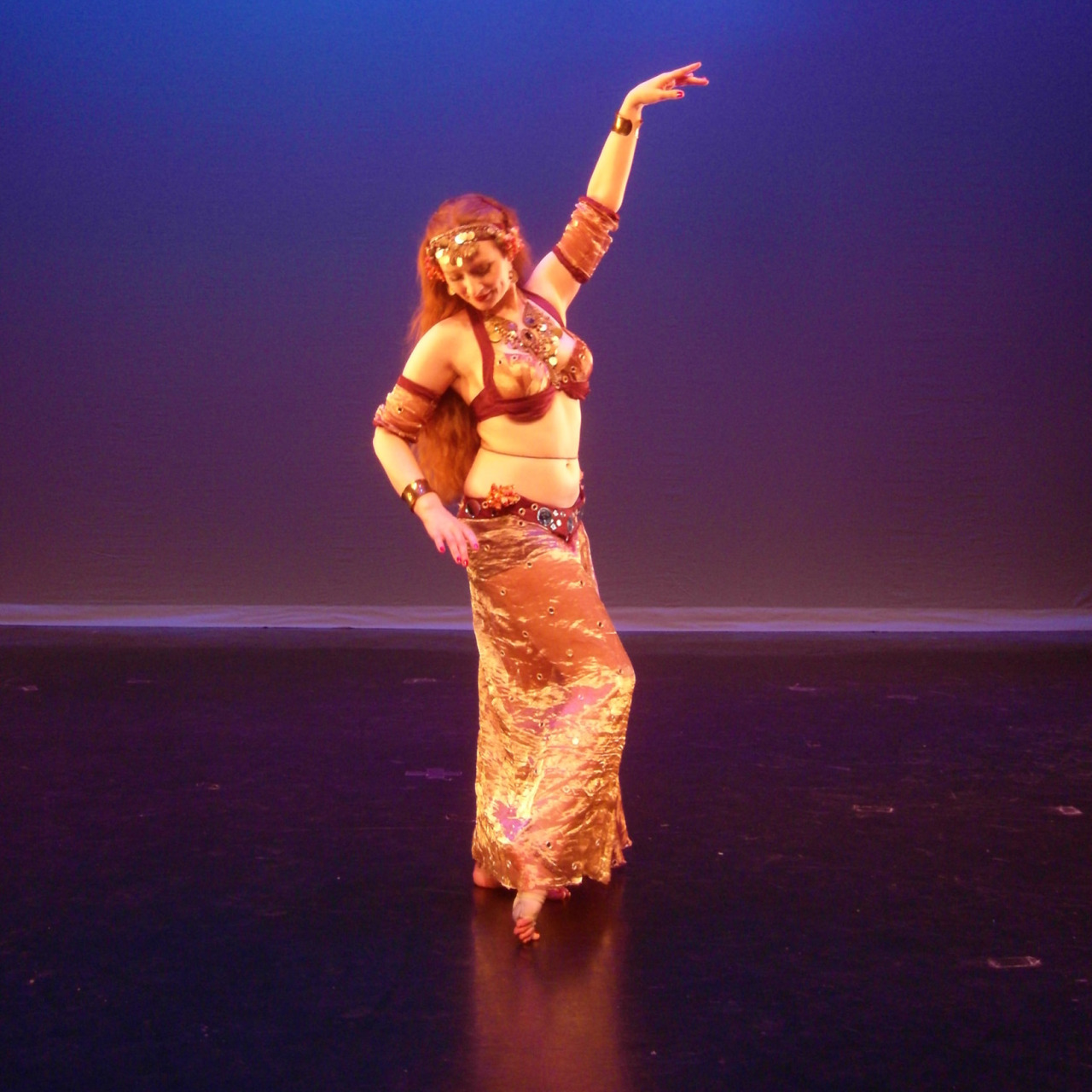
Let's just admire some pictures.


Monday, January 26, 2015

Does Fitness Cross-Training Make Better Belly Dancers? Sometimes. Maybe.

My segment in the video below kicks off at 4:16.  (Link to the full series of interviews.) Watch, or keep reading for an expanded treatment of this same topic.


Like many creative people, I have a personality that encompasses seeming contradictions.  For instance, although I've dedicated the better part of my life to exploring the physicality of dance expression, I am a low-energy person.  I sometimes have trouble finding the energy to dance, and I essentially always have trouble motivating myself to exercise.  To be honest, I find workouts to be something of an ordeal.

Experts often say that if you do not enjoy exercise then you simply are doing the wrong kind of exercise.  This seems credible to me, so at one point I thought that maybe I just didn't know enough about different modes of fitness.  Maybe, I thought, if I understood exercise better, I would learn to appreciate it or find some way to make it work better for me personally.  Thus in 2009 I obtained AFAA group fitness certification,  earned a diploma from a 300-hour vocational preparation program for personal trainers, frittered away far too much money trying each and every one of New York City's fitness trends (aqua yogalates barre boxing spin fusion, anyone?), and even briefly worked as a trainer in a health club.  Turns out that, at least in my case, experts are wrong.  I know now a LOT about exercise, I truly tried it all, and I still find it to be, at best, a chore.   

But the silver lining is that I am often able to put my knowledge of fitness practices to good use helping others, particularly dancers.

So, will fitness cross-training make you a better dancer?  What kind of conditioning program do I recommend?  Unfortunately, as with so many things, there are no one-size-fits-all answers.

You do need a reasonable fitness level to perform, at least in a professional capacity, and the more fit you are, the more artistic options are available to you.  And if you are a professional entertainer, cross-training can be a useful to tool for achieving and maintaining the slim figure that is required for many jobs in the commercial arena.

For dancers who are more involved with belly dance as recreation, or for dancers who are primarily involved with belly dance as a fitness activity in and of itself, cross-training can be beneficial but is certainly not a requirement.  While being more fit opens up more options, one of the most appealing features of belly dance is its adaptability to dancers at differing levels of physical ability.  Not every dancer needs to do floorwork or to coruscate indefinitely through a breakneck karshilama.  Many dancers, including myself, cherish belly dance in its aspects of social dance and folklore, people's dances that are accessible to anyone and everyone.  I am saddened every time I hear a potential student say she thinks she is not in good enough shape to try out a beginner class.  At an entry level, belly dance truly has no fitness prerequisite.

And perhaps more importantly, all the fitness in the world won't make up for a lack of dance skill.  Star quality depends not only technique, but on musicality, expression and stage presence, and, in the case of cultural styles, contextually appropriate styling. Both strength and flexibility improve a dancer's versatility, but, to my mind, highly-developed coordination and body awareness are far more important for the clean, clear, fluid qualities of movement that primarily distinguish virtuoso belly dance technique.  Beyond a baseline level, training large skeletal muscles seems generally less helpful to most belly dancers than the careful cultivation of nuanced articulations—a process that is usually best supported in dance class rather than a gym.
 
That said, if dance classes alone are not giving you the level of fitness you desire, or if you have the time, energy and financial resources to train outside of dance class, cross-train away.  When used as a tool to unlock your body’s potential, cross-training can deepen the authenticity of your physical presence in your dancing, give you a greater sense of owning your movement vocabulary, and strengthen the artistic signature of your work.

When putting together your workout, my best advice is to do a little of what you dislike the most, for utility and maintenance, and a lot of what you like the best, focusing on those activities not as exertions, but as tools to discover and cultivate your unique physical aptitudes. 

Whatever it is you dislike, because it is often neglected, is almost always the thing your body needs most urgently, and the thing from which you will gain the most immediate benefit.  For women in particular, the dreaded exercise is often heavy lifting; men often find excuses to avoid stretching. Core work is another frequent nominee in everyone's most-detested category.  Whatever that thing is for you, a little of it is likely to take you a long way.

Once the chores are taken care of, revel in whatever things your body likes best.  (Or, if that’s not happening, whatever things it tolerates least begrudgingly.)  Find the activities that are “easy,” and see where they will take you. In my case, I’ve focused cross-training on developing my natural flexibility, and a result, I’ve crafted an exceptionally limber body that imparts my dancing with signature fluidity.  But had I instead been naturally good at strength training or cardio, I am sure developing those facilities would have taken my dancing in an equally interesting different direction.

Moving on:  I have suggestions to share about various modalities.

Strength-Building at the Gym
Many of the iron-pumping exercises in common use in mainstream gyms were popularized by bodybuilders, and may be better for bodybuilding than for building functional strength.  This doesn’t mean that women who do these exercises are likely to become bulky, or that these exercises won't burn calories, just that one-muscle-at-a-time isolations are seldom the most efficient way to train for for real-world activities.  I recommend that unless you are bodybuilding, remediating, or working on a rehabilitative goal, you choose bodyweight exercises that engage your full form over machines or exercises that leverage a bracing posture.  For instance, choose pushups over bench presses; choose squats over machine leg presses; choose pull-ups over bicep curls.  When you have a choice between performing an exercise on a Nautilus-type machine or with free weights, go with the free weights.

Ladies: you make me bonkers when I hear you say, “ew, I don’t want to lift weights because then I’ll get masculine bulging muscles.”  NO YOU WON’T.  Or, at least, not unless you make it the central focus of your life and work fiendishly for that goal.  And even then, if you were to reach that elusive state and didn’t like it, guess what?  You could stop or change up your program, and the muscles would quickly melt away.  Problem solved.   Not only is this “I don’t want muscles” rhetoric nonsense—bulking up is very difficult for women—it’s damaging to you, your mother, your sisters, and your daughters.  Don’t perpetuate the idea that strength shouldn’t be cultivated by women because it will somehow make them look ugly.  Stop stop stop.

Also, if you’re going to do anything in a gym (and maybe even if you are not), buy this book: A Woman's Book of Strength. Author Karen Andes does a wonderful job of explaining ideal form, and, more exceptionally, writes beautifully about weight lifting as a mind-body discipline and as an expression of femininity.  Really, this book is SO GOOD.  Buy it.

CrossFit, Kettlebells, Calisthenics, Gymnastics, Agility Training, and Whatnot 
For dancers in particular, I tend to think these types of workouts are likely to yield more useful results that more traditional "gym" types of activities.  However, these workouts are most accessible to individuals who come to these activities with a baseline level of fitness already in place.  If you are inclined to explore in this direction, be proactive about injury prevention, and, ladies, don’t get psyched out by the macho berserker culture that is somewhat attached to this fitness genre.  As much as your finances allow, work with a coach or trainer who can ensure that you are working safely and effectively.  For inspiration, please check out the amazing CoachTara


Yoga
For those for whom yoga works, yoga works beautifully.  But, hard as it is to believe in these yoga-saturated times, yoga is not for everyone. (Or, at least, not every form of yoga is for everyone. In the context of this discussion, I’m speaking about physical practices of yoga that one might undertake as part of a conditioning program.)  One consideration that I seldom hear discussed is how body weight and body weight distribution affect yoga practice.  I have observed that, in the belly dance community, the most enthusiastic proponents of yoga conditioning tend to be slim, with bodies that are relatively broad-shouldered and narrow-hipped.  And, in my own body, I’ve noticed how even small amounts of lost weight can transform postures with which I had struggled in to something relatively easy and pleasant, and free up previously-inaccessible ranges of motion.  (Eagle pose, for instance, is just not mechanically ideal for non-willowy legs such as mine.)  So, especially for those with a voluptuously low center of gravity, if yoga is a struggle, the moves in your practice may  simply be a bad match for finding your movement potential.

Another consideration of yoga cross-training is energetic.  At least for Oriental styles, belly dance tends to be energetically contained and curvilinear in its geometry.  Most yoga radiates outward in straight lines.  This dichotomy isn’t necessarily problematic, but I would encourage dancers to be thoughtful about if and how they wish to incorporate the energy and lines of yoga in to belly dance, and to not engrave into muscle memory shapes that one does not desire in one’s dance.

Probably everyone already knows this already, but there are a lot of very high quality yoga classes that can be streamed over the internet.  These might not be a great resource for beginners (as with exercises in the CrossFit, etc category above, injury prevention and and ideal form are much more likely to be realized with good coaching), but are an economical and convenient option for those qualified to work independently. I periodically take classes through YogaGlo.  I also like the instructors and beautiful outdoor filming at YogaToday.  

Pilates and “Boutique” Fitness 
Pilates is yet another modality that works for those for whom it works.  I am not one of them.  When I was much younger, this was a source of vague uneasiness for me.  Before small-p pilates came into the public domain, it was a somewhat obscure modality practiced primarily by dancers, many of whom believed it to be an essential tool in crafting a dancer’s body.  In my eagerness to cross every t and dot every i, I did my best to cultivate a Pilates practice, but could not find modifications that would work for my low back.  (I have some structural asymmetry in my pelvis and an unstable sacrum, which sounds like something Pilates should be good for, but in my case it is not.) I currently do not practice pilates in any form.  Older and wiser, I now have no doubts that I possess the body of a dancer, and an absence of pilates has been immaterial.  But, that said, if you like it and it works for you, do it!

Those seeking an alternative or complement to Pilates might be interested in Gyrotonic.  Gyrotonic apparata are somewhat similar to those used in Pilates, but the curvilinear paths of Gyrotonic may be a better complement to the air design of belly dance.

In New York City, fitness-seekers may also be interested in Shen Tao.  This studio uses unique proprietary apparata, and the director is exceptionally sensitive to creating custom programs that meet individual needs.

Finally, well-bankrolled dancers in NYC and other affluent urban centers might enjoy classes in one of the many the Lotte Berk-derived barre programs.  From an exercise perspective, I like the format and flow of this style pretty well, but the high-life packaging is a bit much for my sensibilities.  Once I took a class at Physique 57, and between movement cues the extremely upbeat extremely blonde instructor attempted to motivate us by telling us that after class we would all fit into new skinny jeans, and we would have a field trip to the "Jeans Bar at Barney’s."  Then, in time with the music, clapping along on the beat, she chanted, "JEANS BAR AT BARNEY’S! JEANS BAR AT BARNEY’S."  Yes, this really happened. 

Cardio
This is usually a pretty easy one; most everyone has a heart-rate elevating activity that they find to be at least tolerable, or can at least motivate themselves to get up and go for a walk.  Personally, I am an unapologetic fan of step aerobics, although there’s not currently one in my regularly scheduled activities.  When I lived in Washington, DC, I used to Jazzercise, although I think a lot of what I liked about that program were things I liked about my specific instructor, Pretha Mitchell.  (The web says she’s still teaching.  If you are looking for a fun workout in DC, this might be it.)

Most of my current cardio happens on an elliptical machine, which, honestly, I really don’t like very well, but once I get myself to the gym I listen to something in my headphones and it’s over with quickly.  I concentrate on how improved circulation is keeping my skin beautiful and my blood vessels healthy.  I also remind myself about how much I value maintaining the ability to run away from danger, or to run to the assistance of someone in need of aid.

I used to run outside sometimes, but essentially quit after one too many episodes of street harassment.  (Sorry team.  Jerks: 1, Me: 0. The words bounce off but I’ve been grabbed a few times, and that has been enough to make me concede defeat.)  But I do enthusiastically recommend running for those for whom it’s an option.  If running is even vaguely appealing to you, go find a copy of the fascinating and inspiring Born to Run (there's probably one at your library), and see if reading this book doesn't charge you up.

Flexibility / Mobility
In this arena perhaps more than any other, different things work for different people.  I have done very well with long static stretches.  In DC, I benefitted enormously from classes with Lucy Bowen McCauley.  If you are outside of DC, the next best thing is probably yin yoga.

Other approaches that I have seen work well for people are Active-Isolated, Kelly Starrett’s Mobility WOD, Intu-flo, and Ki-Hara Resistance Stretching.  The story of swimmer Dara Torres’ work with Ki-Hara is especially interesting.

Sometimes massage also makes a big difference.  I see a therapist as often as I can afford to, which unfortunately is pretty much never.  But I do have a close relationship with my foam roller, and with a blue acrylic dolphin-shaped thingy that’s designed to dig into trigger spots.  I also recommend MELT classes.

Finally, I am no way qualified to make any recommendations about nutritional supplements, so I'm not making any, other than to say if you have mobility issues that might be related to adhesions or internal scarring, read up on serrapeptase.

Coordination
I get more than enough of this in the context of my dance activities, so I haven’t made much of a study of coordination programs in the fitness world, but I have always been intrigued by this program: Andrey Lappa's Dance of Shiva.


Somatic Education
Established dancers are unlikely to need much work in this area, but taking ownership of efficient movement patterns is a huge factor in day to day good health.  If you suffer from chronic pain, are injury prone, have postural problems or acquired asymmetries, or struggle to move with grace, the act of putting new intentionality into your movement patterns may have significant fitness benefits.  If this is you, look at Feldenkrais, Alexander Technique, and Aligned and Well.  In New York City there are a gazillion resources specific to this sort of work, but some of those that I know better and recommend are Somatic Anatomy (one half of whom is a belly dancer), The Breathing Project, Embodied Asana, and Irene Dowd, who can be hard to track down, but seems to currently be at Noho Pilates.


So, armed with all of this knowledge, what is my actual workout, and will it work for you?

Your mileage may vary.  Having gone through the strange, long, dark tunnel of trying to become an “exercise person” only to come out and find myself exactly where I started, I have reverted to the bare-minimum fitness routine I need to stay in good health.  I do 20ish minutes of some kind of cardio a few times a week followed by maintenance stretching, bodyweight squats in the kitchen while I wait for the kettle to boil, and a pushup or two when I need to take a get-away-from-the-computer break.  I kick up into a handstand (balancing with feet against the wall) a few times a week, based on an intuitive feeling that I benefit from occasional inversion. Once in a while I'll do an online yoga class.  When I don't have much going on I try to throw in a little more resistance training, either with weights or just doing body weight exercises.  And, being a New York City resident, I have a good amount of walking and stair-climbing built into my everyday routine.  I regard good posture and optimal biomechanics as my birthright, and attend to their maintenance as a sacred duty.  I am barefoot whenever possible, and in utterly flat shoes when it is not, with occasional exceptions made for hot dates.  That's pretty much it.

Friday, September 19, 2014

The Value of "Professional" Choreography

When I choreograph Oriental dance, I generally approach my work as a music visualization, structuring my composition to reproduce the architecture of its accompanying music. Since most traditional Oriental dance music makes use of repetition with variation and of nested call-and-response phrasing, my choreographies tend to take this same form. I typically show musical recapitulations with movement phrases danced first on side, then danced in a mirrored version on the other side.

I am a fan of balanced composition.
Some dancers may be surprised that an accomplished artist uses symmetrical combinations. At the time I am writing, September of 2014, it is not unusual to encounter the sentiment that it is “more professional” to construct choreographies so that they make no use of repetition, regardless of repetition in the accompanying music. Inspired largely by competition aesthetics, but also by influences from the greater consumer culture, many dancers aspire to switch up to a brand new combo at the start of every musical phrase, and do not use the structure of their music to inform the structure of their dance.

To me, traditional-context belly dance choreography that places asymmetrical movement phrases on call-and-response music seems superficial and clumsy, no matter how sophisticated the individual movements or how beautiful the technique with which they are danced. I perfectly understand free-form movement when a dancer is following the meanders of a taxim. I also understand free-form movement, even to structured music, in the context of improvised dance, when a dancer shares her exploration of music with an audience in real time. But to me, the whole point of choreography is not to simulate improvisation, but to show the results of already-completed creative exploration. I create choreography to take advantage of the additional possibilities an artist unlocks when she prepares, with care, in advance.

So, when I first heard free-form choreography described as “more professional” I was bewildered, and, honestly, dismayed by what I perceived as a slight to both my own aesthetic and to common sense. How had my colleagues become so enthusiastic about dances that use music as nothing more than an atmospheric metronome?

After some reflection, though, I've now come to agree that free-form choreography is indeed the professional's hallmark. I don't mean that my tastes have changed; rather I've thought a little more deeply about the terminology. The pro dancer, the wage worker who depends on entertaining merry-makers and pleasing an employer, absolutely demonstrates professionalism when she continually switches things up.

Having worked in restaurants and nightclubs, I know firsthand that a relentless barrage of novelty has the greatest appeal to the short attention span of a typical contemporary audience in a commercial context. (Wings! Next I'll balance a tray! How about some audience participation? Everybody dance! And let's have some veil poi! You've seen cane, but have you seen flaming cane? On roller skates?) I would like to think that Middle Eastern audiences, who in theory have a greater connection to Middle Eastern music and have historically embraced a more subtle aesthetic, would be less receptive to novelty-based choreography. But some of the most haphazard-looking sequencing that I've seen recently has come straight from Egypt, and many of today's most-admired Egyptian-style stars construct dances around accents, spins, spine-whipping body waves, and ceaseless shimmies, paying minimal attention to melody instruments. In the world of Tribal Fusion, too, there's a marked increase in frenetic showboating. With this in mind, a planned and polished atmosphere blast may indeed be the most reliable way to win the acclaim of the undiscriminating masses and secure paying work.

But our dance deserves to be valued for more than the wage a dancer earns. With the greatest admiration and respect for those who succeed at the absurdly difficult task of earning a living through belly dance, I encourage dancers not to lose sight of other approaches and other perspectives. Our community has a tendency to assign the highest value to that which it considers “authentic,” so some may choose to arbitrarily adopt Egyptian, Turkish, or other culturally-conventional aesthetics. We also reward dance which is “professional,” too often forgetting that image, personality, networking, and business savvy strongly affect a dancer's success in the marketplace. But just because a dance is authentic and professional does not mean it is an artistic success.

Good dance can come in all kinds of packages. The mainstream of belly dance is the popular expression of our medium, something like what top-40 pop is to music.  I don't mean to imply that all popular entertainment is necessarily superficial formulaic fluff, only that, like music, fiction, movies, and other creative arts, belly dance can shine in folk, commercial, and "high" art expressions. The popularity of mass-market paperbacks doesn't diminish the value of literature. Or, to those who enjoy it, of fan-fiction published in internet forums. The popular embrace of slickness and novelty simply should not constrain the aesthetic of every dance. Our “niche” products—folklore; fakelore; historic and vintage styles from bygone eras; various permutations of “tribal” dance with attendant acronyms; Goddess invocations; conceptual work in and beyond fantasy, gothic, and steampunk contextual transpositions; my own idiom of “exquisitely crafted belly dance theater”—do not each speak to everyone, but they are cherished by their devotees, and they are the creative wellspring on which the commercial sphere depends. An artist is not diminished if her work speaks only to a select audience.

I value work that shows deftness, sensitivity, and heart. I appreciate creativity, refinement, and rigor. I feel most proud of my most self-expressive work, and I generally prefer to see and study with artists who similarly invest their dances with their own distinctive signature. I value “authenticity,” but to me this means an attraction to artistic honesty rather than an indiscriminate embrace of Egyptian trends.

But to each her own. The Extreme Dance Blast has its fans. And even if it isn't my cup of tea I do appreciate the technical skill of its presenters. I wish more of my colleagues had this perspective. I feel like most of those who, like me, are left flat by haphazard sequencing want to throw the babies of technique and choreography out with the bathwater of the latest trends. I hear from too many dancers who draw the incorrect conclusion that choreography, by definition, is a demonstration of having memorized a laundry list of arbitrarily assembled movements, and that only artists who improvise have a deep and meaningful engagement with music. I see an anti-technique backlash too, led by dancers who seem to not understand that technique can be cultivated as a tool, not something one might only pursue as an end unto itself. “Just give me a dancer who does three moves, but does them well,” they say. “These technique queens are trying too hard,” they grumble.

As the kids (sort of) say, don't hate the game, hate the player. Actually, don't hate the player either. Any given three-move dancer may truly be a delight, but complex expressions that use complex vocabulary have equal—or, I believe, greater—potential to charm, to intrigue, to entertain, to transport. On the flip side, I have abundant, character-building, personal experience with the potential for complex expressions to end in complex catastrophes.  We're still learning our way through this new territory. While some may prefer to stay metaphorically down on the farm, we, as a community, have seen Paris. I love the farm and I love visiting the ladies who call it home, but it's absurd to tell us all that there's no point in exploring beyond its fences. (Young people and international readers who I just lost: try this.)

Having myself participated in more than a little grumbling over the flailings of six-week-wonders who don't try hard enough, I won't malign any impulse that causes a dancer to try “too hard.” I applaud any dancer who is trying at all. I want to give particular personal thanks to those who try hard. In fact, if you are willing to try hard, I challenge you to try even harder. Watching belly dance grow and change, I greatly appreciate the highly technical vocabulary and clean body lines that have blossomed over the past decade, a development in which I like to think I've played some modest part. Now, I hope to encourage a parallel evolution, and inspire dancers to put as much thoughtful refinement into the way moves are sequenced as many of us now put into the moves themselves. Not every dance needs to be choreographed, not every choreography needs to aspire to the level of high art, and not every artistic choreography needs to be a music visualization, but our skill as choreographers needs to catch up with the new sophistication of our vocabulary. I am confident that it will. With risk comes the potential for failure, but ars longa, vita brevis, and you are not getting any younger. If you fail, I'll try not to judge, and I'll try to to keep telling everyone else not to judge you either. On the other hand, you might do something great, and I want to see it.
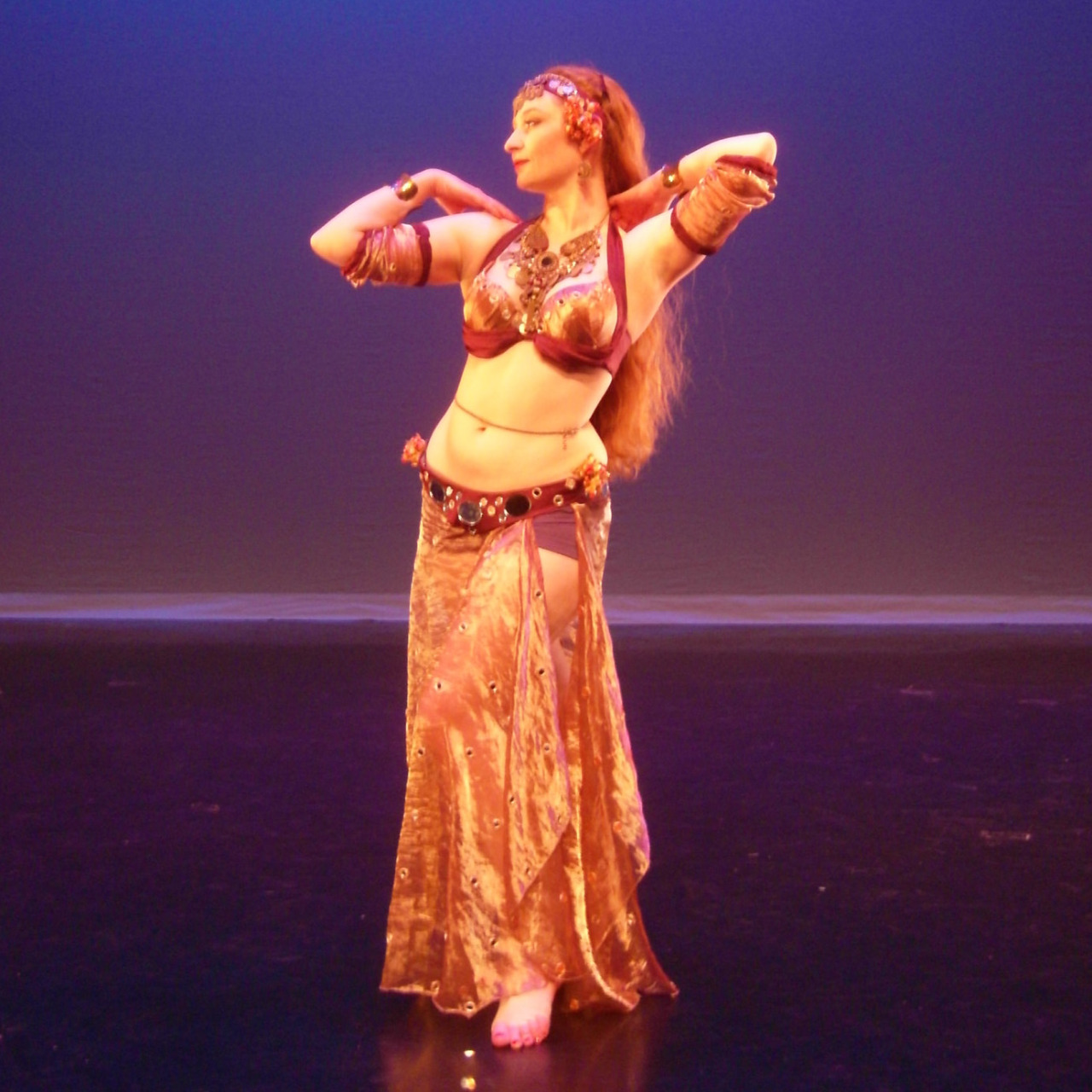

Click that ►. You can get it if you really want.

Thursday, March 6, 2014

Why I Can't Stand Petty Snark Pretending to Be Social Commentary

Apparently, Randa Jarrar is not a fan of my work.  Not that I think she's talking to me in particular, but Randa Jarrar wants the world to know that she "can't stand" "white" "belly dancers."  She then makes a second assertion (that she doesn't really defend or connect to the first):  "Whether they know it or not, white women who practice belly dance are engaging in appropriation." Here's the essay, which was published a few days ago by Salon.

I hate even posting this link. Randa Jarrar's assertions are inflammatory nonsense, and she deserves very little of the attention she has drawn. But her essay has drawn quite a bit of attention, at least in my corner of the bellysphere, and I'm not seeing every last bit of the nonsense being called out as clearly as I would like it to be. If people are inclined to use this essay as a starting point for discussions about cultural appropriation, racism, Orientalism, and colonial legacies, great. But if people think these are the issues that Randa Jarrar has actually written about, I would encourage them to read more closely. What I see is an essay about body shame, and a nasty wallow in the time-honored tradition of shaming professional dancers. Just because this pettiness is disguised behind a veneer of sensitive issues doesn't mean it isn't just plain old garbage.

It's hard to recap Randa Jarrar's writing because her narrative is so muddy, but she starts with some commentary on the colonial legacy of belly dance and of the very term "belly dance." She then moves on to fond reminiscences of social dancing at home and at weddings, particularly in the company of other women; then expresses distaste at the body, costume, and artistic signature of a "white" dancer she has seen at a restaurant.

The white dancer is [emphasis mine] "not a terrible belly dancer, but," Randa Jarrar continues, "she was incredibly thin..." Okay, people like different things, and it's okay to have and state preferences. But thin-shaming is just as petty as fat-shaming, and a quick internet search reveals the author to be a woman of larger proportions who thinks about body image. Here's an excerpt from Randa Jarrar's blog, from a post titled Lately I Feel Beautiful:
 For years, I was told that because I am not thin, I am not allowed to feel or be beautiful. Well, that’s strange, because I feel and am beautiful right now, everyday.
This is a feeling I am extra-proud of since, also lately- no, my whole life- I have seen movies, magazine covers, TV shows, and articles that declare that I ought not to feel beautiful- or healthy, because of my size.
I am fat- really fat, and in the past year, I have become more and more in love with my fat. I love my body rolls. I love my double-chin. I love my flappy arms. I love my stretch marks.
So perhaps Randa Jarrar brings up the thinness of the dancer as a way of criticizing the narrowness of how beauty is defined by mainstream commercial imagery, and is also rolling in a point about the whiteness of that same imagery. Or maybe she's reaching out with her own story, expressing what it's like to see positive attention being given to a body that is unlike her own. Either topic has the potential to be interesting, but unfortunately I don't think that's what's really going on here.  I think she's just expressing peevish distaste for an entertainer's intention to be entertaining in a thin body. 

(I don't know how “brown” Randa Jarrar perceives herself to be. In the photos that come up in an image search, she looks pretty pale. She doesn't explicitly say that she's defining whiteness in terms of skin color, but her use of “brown-ness” as a device to frame the opposite of whiteness strongly suggests the equation of whiteness and pallor.)

Back to the Salon Essay about how Randa Jarrar can't stand white belly dancers.  Reading on, we learn that the white dancer (who isn't a terrible dancer, but who is incredibly thin I guess in a bad way) is also "in Arab Drag."
"because that’s what that is, when a person who’s not Arab wears genie pants and a bra and heavy eye makeup and Arabic jewelry, or jewelry that is meant to read as “Arabic” because it’s metallic and shiny and has squiggles of some kind."
Apparently the costuming itself is okay. What is deemed problematic is that it is on a non-Arab. Earlier in the piece Randa Jarrar expresses distaste for "white women in flowing, diaphanous skirts, playing at brownness." Here too the objectionable element seems to be the skin color of the diaphanous skirt-wearer, not the skirt itself. I find it surprising that someone who is ostensibly indignant about cultural appropriation has no opprobrium for nightclub costuming. The two-piece "bedleh" costume was invented at the beginning of the 20th century, at the same time that Middle Eastern dances were reconfigured into a nightclub entertainment for audiences of Europeans and wealthy Westernized Arabs.  It's mostly definitely not a folk costume.

Back again to Randa Jarrar's ordeal of fine dining with a floorshow.  The white dancer was thin, she was wearing costuming to which she is not entitled, and 
"she didn’t remind me, in any way, of Tahia Karioca or Hind Rostom or my absolute favorite Raqs Sharqi dancer, Fifi Abdo."
Huh.  I too really like those great dancers from days past, and I like the historical styles they represent. But this "go Fifi or go home" attitude is singularly hardcore. Remember the white dancer was "not terrible."  So I guess maybe she wasn't good either, but this isn't described as an issue of her competency, but rather her similarity to stars of yesteryear.  Is Randa Jarrar really saying that it's inherently objectionable that the artistic trends of belly dance are not frozen in time? If so, Randa Jarrar will never enjoy ANY live performance of professional belly dance, including the dances of plump brown-skinned Egyptian Arabs, because the styling of Fifi (the most recently active of those dancers) is long gone.

Moving on again.  Having concluded her story about enduring the white dancer at the restaurant, the author next veers off into unclear ideas about loose-fitting clothing. She speaks with approval of Fifi Abdo dancing in a gallibeya (weirdly described as "loose robes"), and then shares an anecdote on whose meaning I am unclear:
"At a movie theater in Cairo in 2007, I argued with a male friend about why the lead actress wore a strange, baggy dress underneath a bra-and-skirt dancing ensemble. He suggested that she was uncomfortable with her body; I suggested that the country was becoming more conservative and she was too much of a media darling to appear with her skin exposed."
Does Randa Jarrar share the conservative attitudes to which she alludes? She doesn't share a "male" attitude that someone would wear a shapeless garment because they were uncomfortable with their body, and, remember, she doesn't object to nightclub costuming as long as it is worn by Arab dancers.  But then again, there was that thing in praise of Fifi in the gallibeya...

Randa Jarrar veers off further:
"Years later, the revolution happened, or tried to happen, and when the Muslim Brotherhood took over, and Western news outlets began publishing stories that claimed belly dancing was a dying art. Tell that to the women on the streets and on rooftops and in bedrooms and living rooms and weddings dancing their hips off. (See this video, for example, of actual working-class Egyptian women of all sizes and ages dancing in the streets.)  The one interesting thing about these stories is that they reported that Western, or white women, were beginning to take over gigs in Egypt. These women moved there out of an obsession with belly dance and are now appropriating it from local dancers."
So basically: yes, a conservative regime does suppress professional performance of belly dance, but that's okay, because belly dance as an art form is just fine, if not better off, without professionals.
.
.
.
.
So there you have it. To me this looks like a simple case of Randa Jarrar (who also wrote that she did not hire a pro but instead was “her own” dancer at her own wedding) wanting to be the center of attention, and she would like for all of you sharmuta professional belly dancers in your skimpy costumes to stop upstaging her. Unless maybe you happen to look just like her, or you are a nonthreatening video clip from a bygone era – then it's okay if people express approval.
I have a few more thoughts about "whiteness," foreign dancers, professional dance, and the credibility of Randa Jarrar as a cultural critic.

It's true that Egypt's most successful professional dancers, both foreign and Egyptian, tend to have pale skin (and for that matter, straight hair). Egypt is in Africa, but its cultural mainstream does not prize prominent African features or coloration. How much other cultures have influenced this preference is debatable, but the preference predates 20th century colonialism.  While it is unfair, and a real thing to deplore (I wish it's what Randa Jarrar had written about), the reality of the dance market is that it is simply easier for light-skinned dancers, and less open to dark-skinned dancers, regardless of whether they are Egyptian or foreign. Complexion trumps competence.  For Randa Jarrar's idealized brown Arabs, professional dance may very well be an unwelcome job of last resort that doesn't even pay very well. 

Nonetheless, there is no glut of obsessed and predatory "white" emigrees filling vacancies left by brown-skinned Arabs.

For Egyptian women from the Muslim Arab cultural majority, dance is simply not a respectable profession, so dancing professionally is not an option. This is a firmly entrenched cultural attitude that predates current conservative politics by centuries. Perhaps dance is a fine social activity to practice away from the "male gaze" in the private confines of one's home, but the same activity becomes a disgrace when one's body is on display for undifferentiated male viewing, let alone when the dancing body is displayed in exchange for money. Breaching this standard of "modesty" is a shameful transgression – it is often conceived of as a shade on a spectrum of prostitution.  Star dancers suffer less in the court of public opinion, but the majority of working dancers are not stars.

So who's dancing?  Who has the freedom to defy mainstream expectations and constraints?  Foreigners and other marginal "others."  Alien work authorization is notoriously difficult for foreign dancers to obtain, but many of Cairo's current professionals are from the US, Brazil, Europe, and countries of the former Soviet Union. But the fact that many dancers working in Egypt do not represent the mainstream of Egyptian Muslim Arab society is a cultural constant, not a new development. Historically, Egypt's professional dancers have always come disproportionately from the social margins; they are women from ethnic or religious minorities, including Copts and other Christians, Jews, Rom and Dom ("gypsies"); women from the lower classes who are born into a family business of dance and music; or women who are just plain poor. In an ironic twist, sometimes financially-independent college-educated women occupy this same marginal space.  Foreigners and these marginal "others" aren't displacing anyone – they are the only ones for whom dance jobs are real options.
Foreigners are present in Egyptian professional dance explicitly because they are less inhibited by Egyptian taboos.  Not only do foreigners NOT take away native jobs, they enrich the Egyptian economy through their participation in Egypt's dance industry. Foreign dancers are dance tourists and visiting students, customers of Egypt's costume design houses, consumers of Egyptian-produced music, and the patrons of touring Egyptian workshop instructors. Author Randa Jarrar says of Egyptian teachers who teach non-Egyptian students, "their financial well-being is based on self-exploitation." This does not sound to me like a criticism dependent on the skin color or nationality of the student of Oriental dance, but, once again, a blanket condemnation of dance professionals.  

And yet Randa Jarrar did praise a few professional dancers–Fifi Abdo, Taheya Carioca, and Hind Rostom. Why does she fail to appreciate that their skill and stage presence are made possible by their professionalism?  Even in a gallibeya, even in woman-of-the-people non-Oriental mode, to an educated critic Fifi is clearly demonstrating a level of talent and preparation that is emphatically NOT that of "women on the streets and on rooftops and in bedrooms and living rooms and weddings dancing their hips off." Fifi is a pro, and like other professional dancers her artistry was made possible by income derived from the time she spent perfecting her craft.  Dance, like any art, does not flourish if its creators are not rewarded and can not invest in their work.  

But I guess it's okay to be pro if you wear a gallibeya?  And the other dancers mentioned, Taheya Carioca and Hind Rostom (who wore all sorts of things, but definitely had bedlehs in rotation) are just faded and hence non-threatening black-and-white movie memories?... And, you know, Fifi and Taheya and Hind (all of whom I would describe as pretty pale ladies) are so purely uncompromised by foreign influence...

Except that they're not. Middle-Eastern dance of the 20th and current centuries, whether it is social dance or performance, is utterly saturated with outside influence from both the West and other Middle Eastern cultures. This includes "authentic" dance done by Egyptian Arabs for audiences of Egyptian Arabs. Even if one were to take away all of the influence from England, France, and the United States, you'd still be looking at a melting-pot dance created from the remnants of shifting and overlapping Greek, Persian, Arab, Turkish, and Central Asian empires. And in the 20th century, as much–perhaps more–ballet entered Egyptian Oriental dance from the Soviet Union as it did from Europe or the US. Taheya Carioca's professional surname, "Carioca," reflects the one-time popularity of the namesake South American dance. As for Hind Rostom, let's look at the top two search results


Oh no, I can't stand it!  Whether she knows it or not, Hind is engaging in appropriation!


Oh no! Look at that diaphanous skirt.  Hind is dancing in "Arab face!"  As Randa Jarrar says, "Arab women are not vessels for white women to pour themselves and lose themselves in; we are not bangles or eyeliner or tiny bells on hips. We are human beings." Or, wait a minute, maybe this isn't Arab face, because she is an Arab, and that makes it okay, right? And I can tell that she's an Arab because of her brown skin – oh, no, wait, she's actually quite fair-complected. But wait, I can tell that she's an Arab because of her Arabic-sounding name. Phew, there's a bullet dodged! No wonder it is so important to Randa Jarrar that crafty foreigners not start using Arabic-sounding stage names that would make it more difficult to distinguish who is entitled to wear what.  But, no, wait, she only objects to "names that make no sense in Arabic." So "Taheya Carioca," for instance, is not good?

Am I supposed to use a stage name that does make sense in Arabic?  Isn't that appropriation?

Even when I was primarily doing commercial club work for Middle-Eastern audiences, I never wanted to use a "dance name," mostly because it didn't feel right.   But Arab audiences NEVER liked me as "Autumn Ward." They thought it was deeply weird, they didn't know how to pronounce it, and I was even told that it was not respectful of the culture to not try to assimilate. Against my objections, my name got changed into all kinds of things, many of which made no sense:  Fatima (F-autumn-a), Atman, Ottoman (?), Asmahan, Harifa...

Goodnight Randa Jarrar.  You've wasted more than enough of my time already.


Monday, June 10, 2013

New Videos of Old Dances

I spent last Saturday at Rakkasah's Spring Caravan, a belly dance festival with a particular focus on fusion, where I danced as a guest artist.  I saw plenty of great dancing, although, as usual, some of the fusion pieces were more coherent than others.  But never mind what I don't like. I'm very sympathetic to the fact that artistic risk sometimes results in artistic failure. Ars longa, vita brevis, and it is better to have tried. Except, okay, I do want to say one thing: people, enough with the all-black costumes. Especially in this venue, where the lighting is not very sophisticated, you just turn into an indistinct flat smudge. You do yourself a real disservice by making your movements very hard to see, or, in the case of those of you who don't dance so well to start with, you put all of the focus on your weird stiff claw hands. I know you want to be “dark” and “alternative,” but texture and contrast really help to keep things interesting. Thanks for listening. I'm done now.

I have not been feeling up to working on anything new lately, so for my performance I pulled two pieces out of repertoire: a new-ish drum solo, and “Dream Waltz” from 2010. There's existing video for both of these pieces, but—and I kind of hate to say this—I think this new video is better in terms of the quality of my dancing. Both previous videos were just done straight to the camera, and I think the stark terror inspiration of dancing for a live audience really helped me to access a deeper-than-usual state of mindfulness. And the balance of this audience in particular was ideally inspiring, with a mix of fans and old friends at whom I wanted to beam love, new friends on whom I wanted to make a good impression, new-to-the-scene people who are learning more about belly dance to whom I wanted to show something exceptional, and, [sigh], [eye roll], a handful of determinedly unimpressed, aloof, and tiresome frenemies for whose benefit I always take a special satisfaction in unflappably dancing very, very well.
Vainglorious belly dancers gonna derogate.  I have this potato design on one of my favorite t-shirts.  One of its interesting features is that no one over age 50 can understand it. Illustration by Sarah Aquino.

Another positive factor, although it may not sound like such a big deal, was having a wooden floor. I dance on wood in my workspace at home, where I do the majority of my choreography and rehearsal, and adjusting to the higher-friction marley that's in most of the studios/stages where I film is always a compromise. Often, half of my attention is lost to compensating for sticky flooring tugging on my feet. Being able to flow and glide through steps in the way they were designed made me feel very comfortable on stage and really let me relax in a way many performance venues do not afford.

The drum solo follows below. If you follow this blog or my YouTube page, you may recognize the choreography from a video published in April. But, as I said, to my chagrin, I think this performance is better. Also, take a moment to appreciate that this is realtime, full-frame, uncut footage. I know that a lot of people respond more to atmosphere than content, so I really appreciate the beautiful camerawork and editing on the previous (multi-camera) video of this choreography, but I also take personal pride in demonstrating that it really looks like this in real life, with no secret blunders hidden by cleverly timed cut-aways. (Another person who notably felt this way was Fred Astaire, who specified in the terms of his contract that his dances be shown as-is, with no edits.)


For more information on this choreography, please see my previous post, The "I Hate Drum Solos" Drum Solo.

After the drum solo, I ended my show with a nontraditional piece, Dream Waltz


Background information on this dance can be found in a previous post, here.

A few years ago I was trying to build steam behind the idea of “Cabaret Fusion.” You know, like Tribal Fusion, except building from an Oriental movement vocabulary rather than ATS. But a bunch of people told me that the parallel was not immediately obvious to them and that the language didn't really make sense because cabaret and Oriental styles are already fusions. But if, hypothetically, there were “Cabaret Fusion,” I think Dream Waltz is what it would look like: sexy fantasy revisionist-retro, but with chiffon instead of combat boots. Really unimpeachably technically sharp, but with more glitter and less glitch. Is there any way I can make this a trend? Another of my Cabaret Fusion pieces, Raqs Europa, has the dubious distinction of being my least-watched YouTube video, leading me to believe this is just not in the zeitgeist. But if any one is vaguely on board, would you please get in touch?

Tuesday, May 28, 2013

This Is Not a Love Song


Filmed May 17, 2013, for Andy Troy's "Red Carpet Video Release, Birthday Bash, and Alternative Bellydance Show," at the Empire Room at 230 Fifth, NYC.  Special thanks to dance event coordinator Tanna Valentine.  The music is Amerika by Rammstein.   English lyrics translation here.  Spanish, Arabic, and some other languages here.


As a dance teacher, one of the key lessons I try to impart is the importance of putting one's work in front of the correct audience.

And yet, probably because I have failed to promote myself to the right people, possibly because such people do not exist, my own track record as a performer is marked by one failure of context after another. I'm not even talking about traditional commercial jobs where I know better than to try to deviate from the formula. I'm talking about concerts and showcases where I am sure it's appropriate to present the finely-wrought work I've meticulously prepared, but that plan ends up getting chucked out by an an audience (and, often, presenter) who isn't in the mood for anything other than seeing me mince around like some sort of hypersexualized monkey clown. Belly dance community: I'm talking to you too. In your eagerness to show that you "understand" how an audience is "supposed" to "encourage" a belly dancer, you've been some of the worst offenders, obliterating the best of what I have to offer with inconsonant whooping and ululating, uninvited audience-participating, and music-drowning off-tempo clapping. Dance, monkey, dance! Show us more tricks!!! Scrabble for our approval! Never mind that we can't catch the beat, let's all clap along! Whooooooooo!!!!! It's a party! More alcohol! Pulsing  lights!!! What's wrong, honey? Come on, honey!  Don't be shy, honey! Honey, you need to get the audience into it, honey. TURN IT UP!

I know... It's my own fault. I should just give up and be "tribal," even though that vocabulary doesn't match up with how I instinctively want to move and flatly going through the motions makes me feel artistically dishonest.  Or I should just shut up and mount a theatrical show, even though my lack of an outgoing personality guarantees it will be poorly attended and I will lose money that would be better spent on something practical, like food and shelter. Or maybe I should just give painting a try. Or archery. Maybe needlepoint?

But, wait....  Rammstein to the rescue!  Finally, everyone wins! While the cryptocomedy may be lost to many, everyone can go crazy for an EXTREME DANCE BLAST, and I get to gleefully express my true feelings of despair, futility, and alienation. Success without compromise! Honestly, I think I am more satisfied with this than with anything else I have ever done. I have a few outstanding professional obligations and half-finished projects, but I would love to end my career here and just have this be the sweet, sour, high note I go out on. If this is my last post, or if my entire online presence suddenly disappears and all your "Autumn Ward" searches just point to this video, you'll know what happened.

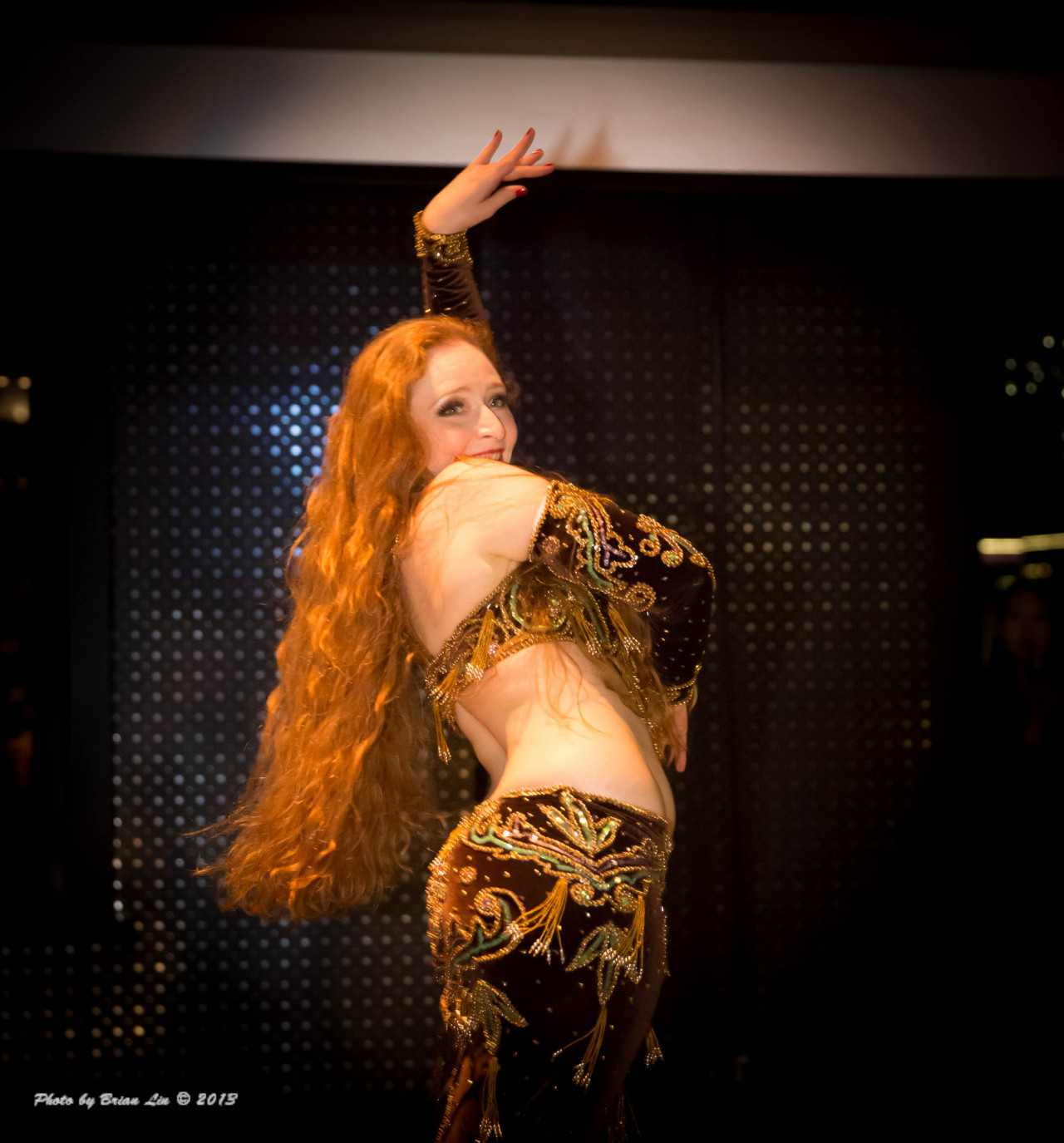
Photo by Brian Lin.

Saturday, April 13, 2013

The "I Hate Drum Solos" Drum Solo


*******UPDATE, June 10, 2013:  There's a new video of a more recent performance of this same choreography. It's embedded at the end of the post.*********


Filmed March 28, 2012.  The music is Ismail, from Beata and Horacio Cifunetes.  Available for purchase hereEVENT SPONSORS:  I currently teach this choreography.  For more information on this and other workshops, please see my list of topics here.


When I first started to learn belly dance, I liked drum solos a lot. Most of my initial student efforts were directed at building vocabulary, and drum solos were the perfect showcase for my growing technical accomplishments. "This is great!" I thought. "I love this! This is like the ultimate dog and pony show of belly dance!" 

Dog and Pony Show


After a few years had gone by, the appeal of tricks and gimmicks began to wear thin, and my enthusiasm waned. Drum solos started to look hollow to me. Dancing drum solos no longer made me feel powerful, confident, and amazingly talented. They made me feel vulgar.


pony dog circus


"Ugh," I cringed. "Drum solos are the ultimate dog and pony show of belly dance." And I essentially dropped them from my repertoire.

But then a few more years went by, and I wondered if I had been too quick to abandon an entire mode of expression. For one thing, drum solos are unusually easy for general audiences to appreciate. (If you have any doubt of this, proceed to YouTube, and look at which belly dance videos get the most views and generate the most favorable comments. The preponderance are drum solos, along with balancing acts, anything that features fire, or pretty much anything done by someone with a scantily-clad, attractive, and youthful body.) While I try to be guided primarily by my own tastes and sensibilities, I can't say that I am entirely immune from the desire for popularity. Beyond that, though, the basic premise of a drum solo—to translate music to movement—is just the basic premise of belly dance. It could not be beyond my talent to create a drum solo that would meet my desire for nuance and sincerity.

Thus was born the "I Hate Drum Solos" Drum Solo. My goal with this piece was to be as fast, crisp, and technical as possible while still choreographing primarily for music interpretation. Where I could find them, I followed pitch changes and melodic shapes with fluid movements, using pops, locks, and shimmies only where truly no other movement would do as well. Following the music very closely gave me a textured but extremely dense composition. I experimented with dropping material to open up more white space—with the intensity high throughout, some viewers probably hit capacity well before the end of the dance—but in the end I kept coming back to the full-strength version. Hypersaturated choreography has sort of become my thing, and it just seemed like I might as well take the project to its ultimate conclusion.

So what have I ended up with? Hopefully an artistic and exciting dance with a strong signature, enough tradition to be comfortable, and enough personality to stand out. But there's still plenty of spectacle left intact, and if that's the primary thing people perceive I'm okay with that too. In a context that's more to my taste, it's easier for me to see it as a strength of the idiom rather than a limitation. And regardless, a little spectacle is probably a good  counterbalance for the quieter work I've  been focusing on recently. Many thanks to the World Dance New York team for making this video available to you.


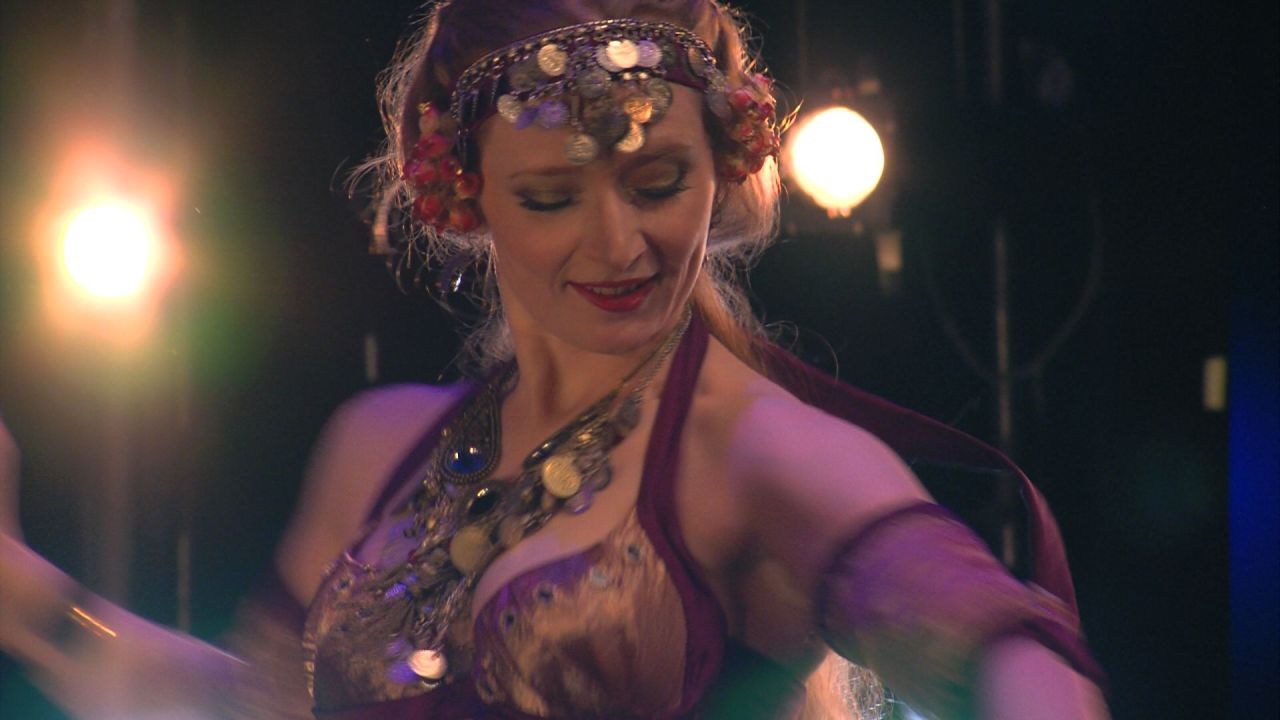
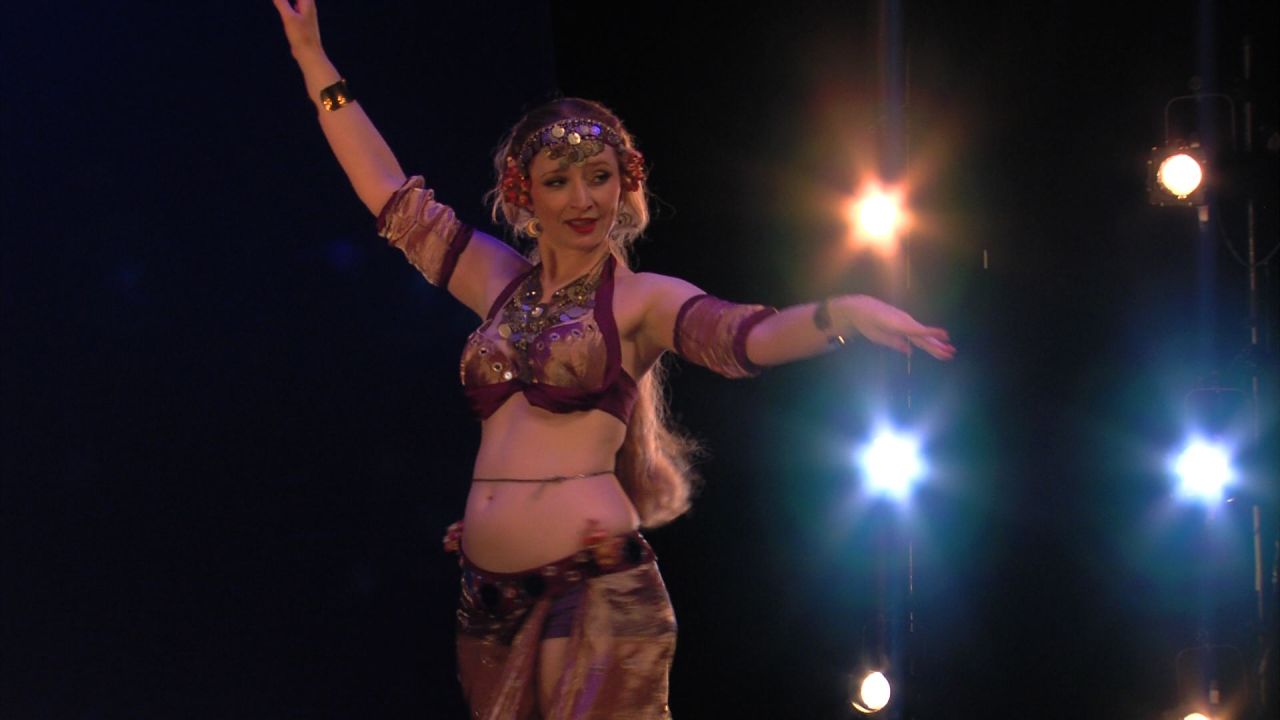
Screen shots and snapshots from the shoot:


JUNE 13, 2013 UPDATE:  Here's another performance of the same choreography:


For more information about this second clip, see http://autumnward.blogspot.com/2013/06/new-videos-of-old-dances.html