The online studio is open! Take class via streaming video on any device. AutumnWard.vhx.tv
For Study Guides, "Zeina" info, and other resources for students and teachers, click through to dancesmarter.blogspot.com

Tuesday, May 28, 2013

This Is Not a Love Song


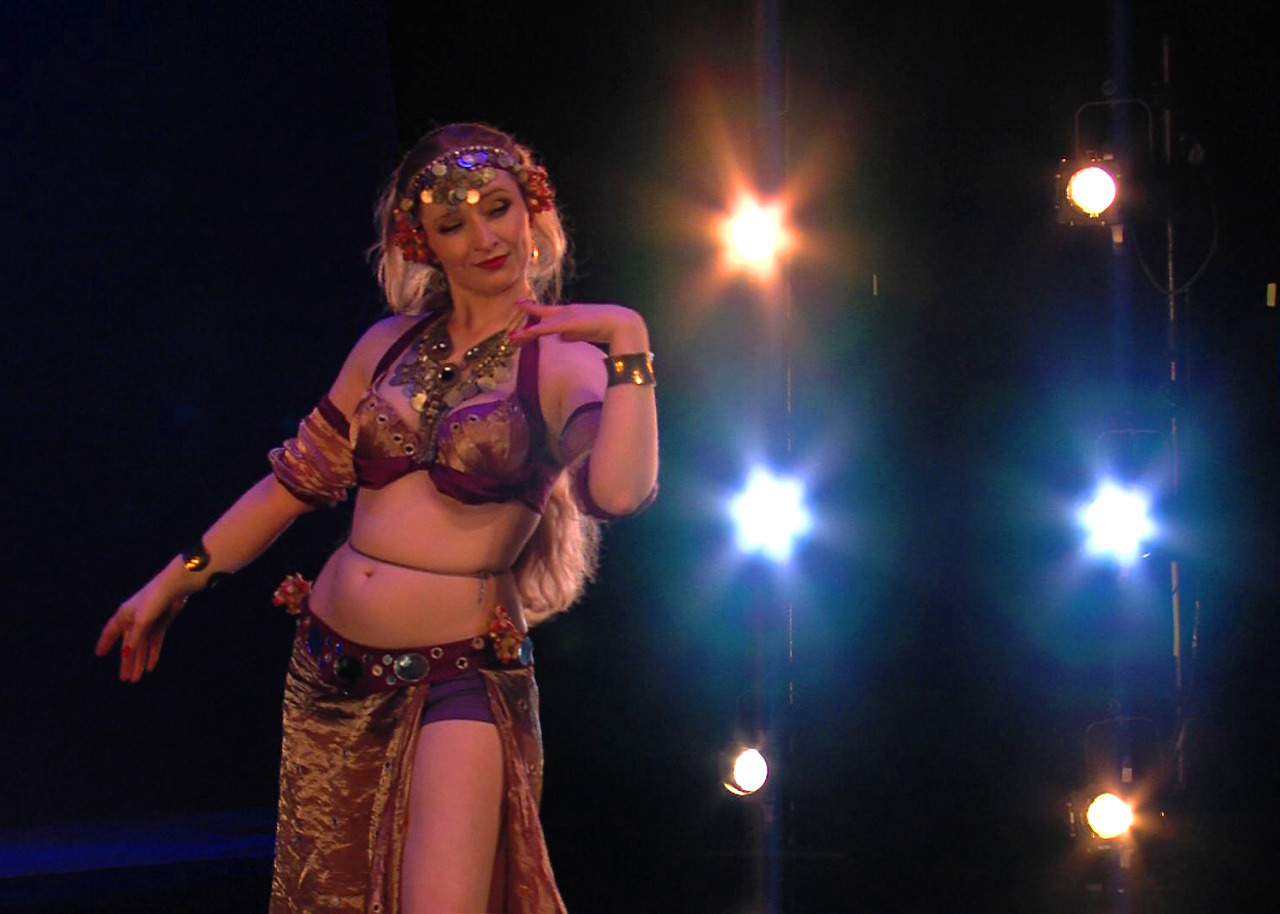
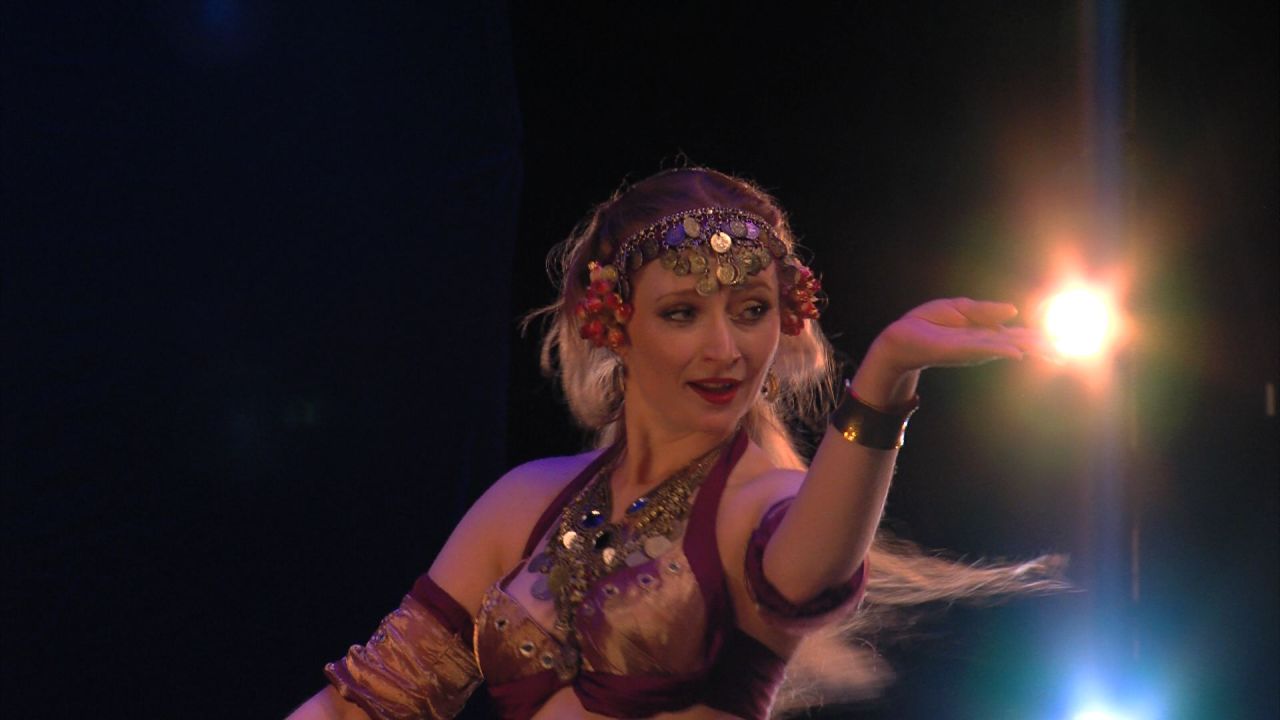
Filmed May 17, 2013, for Andy Troy's "Red Carpet Video Release, Birthday Bash, and Alternative Bellydance Show," at the Empire Room at 230 Fifth, NYC.  Special thanks to dance event coordinator Tanna Valentine.  The music is Amerika by Rammstein.   English lyrics translation here.  Spanish, Arabic, and some other languages here.


As a dance teacher, one of the key lessons I try to impart is the importance of putting one's work in front of the correct audience.

And yet, probably because I have failed to promote myself to the right people, possibly because such people do not exist, my own track record as a performer is marked by one failure of context after another. I'm not even talking about traditional commercial jobs where I know better than to try to deviate from the formula. I'm talking about concerts and showcases where I am sure it's appropriate to present the finely-wrought work I've meticulously prepared, but that plan ends up getting chucked out by an an audience (and, often, presenter) who isn't in the mood for anything other than seeing me mince around like some sort of hypersexualized monkey clown. Belly dance community: I'm talking to you too. In your eagerness to show that you "understand" how an audience is "supposed" to "encourage" a belly dancer, you've been some of the worst offenders, obliterating the best of what I have to offer with inconsonant whooping and ululating, uninvited audience-participating, and music-drowning off-tempo clapping. Dance, monkey, dance! Show us more tricks!!! Scrabble for our approval! Never mind that we can't catch the beat, let's all clap along! Whooooooooo!!!!! It's a party! More alcohol! Pulsing  lights!!! What's wrong, honey? Come on, honey!  Don't be shy, honey! Honey, you need to get the audience into it, honey. TURN IT UP!

I know... It's my own fault. I should just give up and be "tribal," even though that vocabulary doesn't match up with how I instinctively want to move and flatly going through the motions makes me feel artistically dishonest.  Or I should just shut up and mount a theatrical show, even though my lack of an outgoing personality guarantees it will be poorly attended and I will lose money that would be better spent on something practical, like food and shelter. Or maybe I should just give painting a try. Or archery. Maybe needlepoint?

But, wait....  Rammstein to the rescue!  Finally, everyone wins! While the cryptocomedy may be lost to many, everyone can go crazy for an EXTREME DANCE BLAST, and I get to gleefully express my true feelings of despair, futility, and alienation. Success without compromise! Honestly, I think I am more satisfied with this than with anything else I have ever done. I have a few outstanding professional obligations and half-finished projects, but I would love to end my career here and just have this be the sweet, sour, high note I go out on. If this is my last post, or if my entire online presence suddenly disappears and all your "Autumn Ward" searches just point to this video, you'll know what happened.

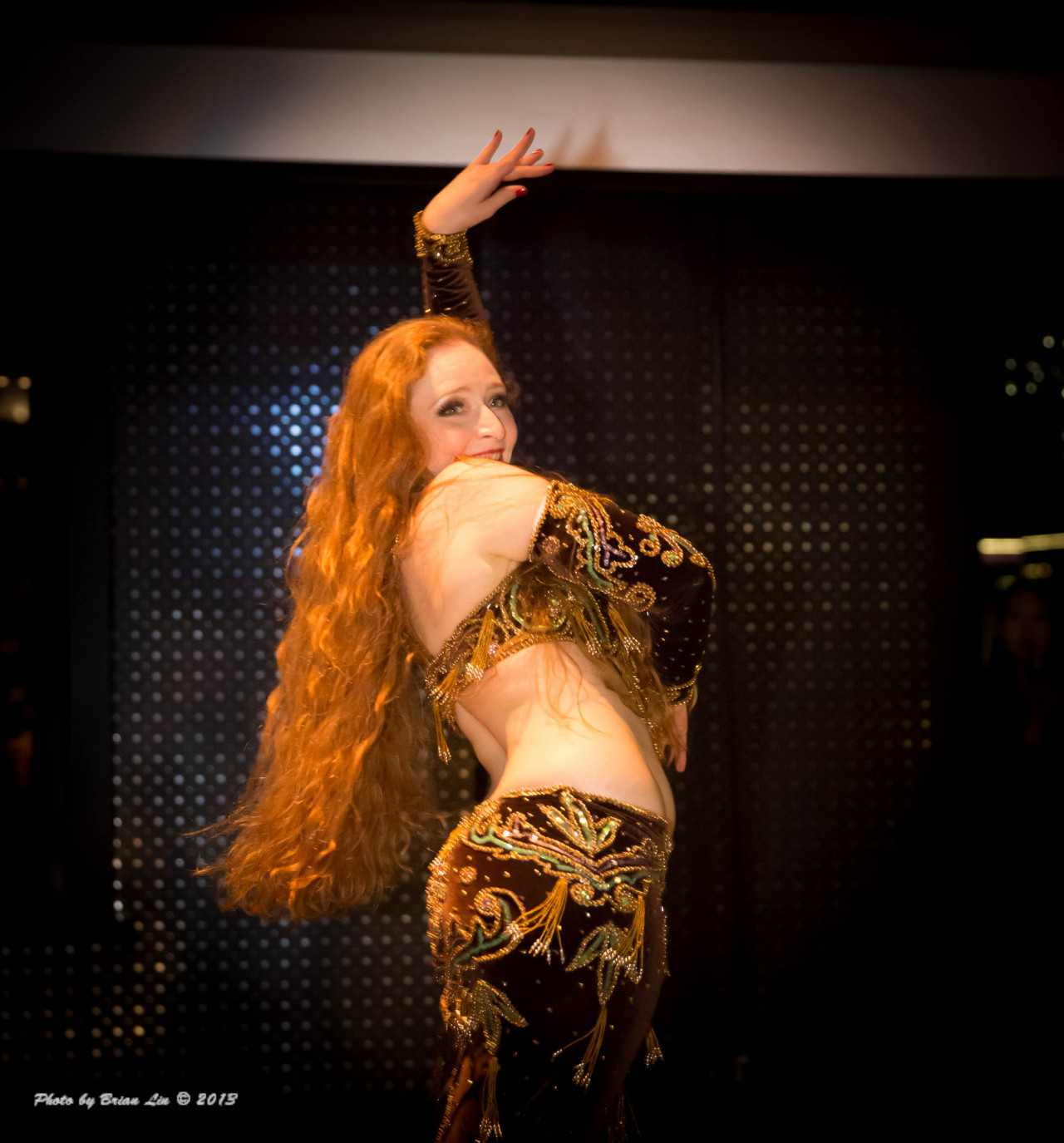
Photo by Brian Lin.

Saturday, April 13, 2013

The "I Hate Drum Solos" Drum Solo


*******UPDATE, June 10, 2013:  There's a new video of a more recent performance of this same choreography. It's embedded at the end of the post.*********


Filmed March 28, 2012.  The music is Ismail, from Beata and Horacio Cifunetes.  Available for purchase hereEVENT SPONSORS:  I currently teach this choreography.  For more information on this and other workshops, please see my list of topics here.


When I first started to learn belly dance, I liked drum solos a lot. Most of my initial student efforts were directed at building vocabulary, and drum solos were the perfect showcase for my growing technical accomplishments. "This is great!" I thought. "I love this! This is like the ultimate dog and pony show of belly dance!" 

Dog and Pony Show


After a few years had gone by, the appeal of tricks and gimmicks began to wear thin, and my enthusiasm waned. Drum solos started to look hollow to me. Dancing drum solos no longer made me feel powerful, confident, and amazingly talented. They made me feel vulgar.


pony dog circus


"Ugh," I cringed. "Drum solos are the ultimate dog and pony show of belly dance." And I essentially dropped them from my repertoire.

But then a few more years went by, and I wondered if I had been too quick to abandon an entire mode of expression. For one thing, drum solos are unusually easy for general audiences to appreciate. (If you have any doubt of this, proceed to YouTube, and look at which belly dance videos get the most views and generate the most favorable comments. The preponderance are drum solos, along with balancing acts, anything that features fire, or pretty much anything done by someone with a scantily-clad, attractive, and youthful body.) While I try to be guided primarily by my own tastes and sensibilities, I can't say that I am entirely immune from the desire for popularity. Beyond that, though, the basic premise of a drum solo—to translate music to movement—is just the basic premise of belly dance. It could not be beyond my talent to create a drum solo that would meet my desire for nuance and sincerity.

Thus was born the "I Hate Drum Solos" Drum Solo. My goal with this piece was to be as fast, crisp, and technical as possible while still choreographing primarily for music interpretation. Where I could find them, I followed pitch changes and melodic shapes with fluid movements, using pops, locks, and shimmies only where truly no other movement would do as well. Following the music very closely gave me a textured but extremely dense composition. I experimented with dropping material to open up more white space—with the intensity high throughout, some viewers probably hit capacity well before the end of the dance—but in the end I kept coming back to the full-strength version. Hypersaturated choreography has sort of become my thing, and it just seemed like I might as well take the project to its ultimate conclusion.

So what have I ended up with? Hopefully an artistic and exciting dance with a strong signature, enough tradition to be comfortable, and enough personality to stand out. But there's still plenty of spectacle left intact, and if that's the primary thing people perceive I'm okay with that too. In a context that's more to my taste, it's easier for me to see it as a strength of the idiom rather than a limitation. And regardless, a little spectacle is probably a good  counterbalance for the quieter work I've  been focusing on recently. Many thanks to the World Dance New York team for making this video available to you.


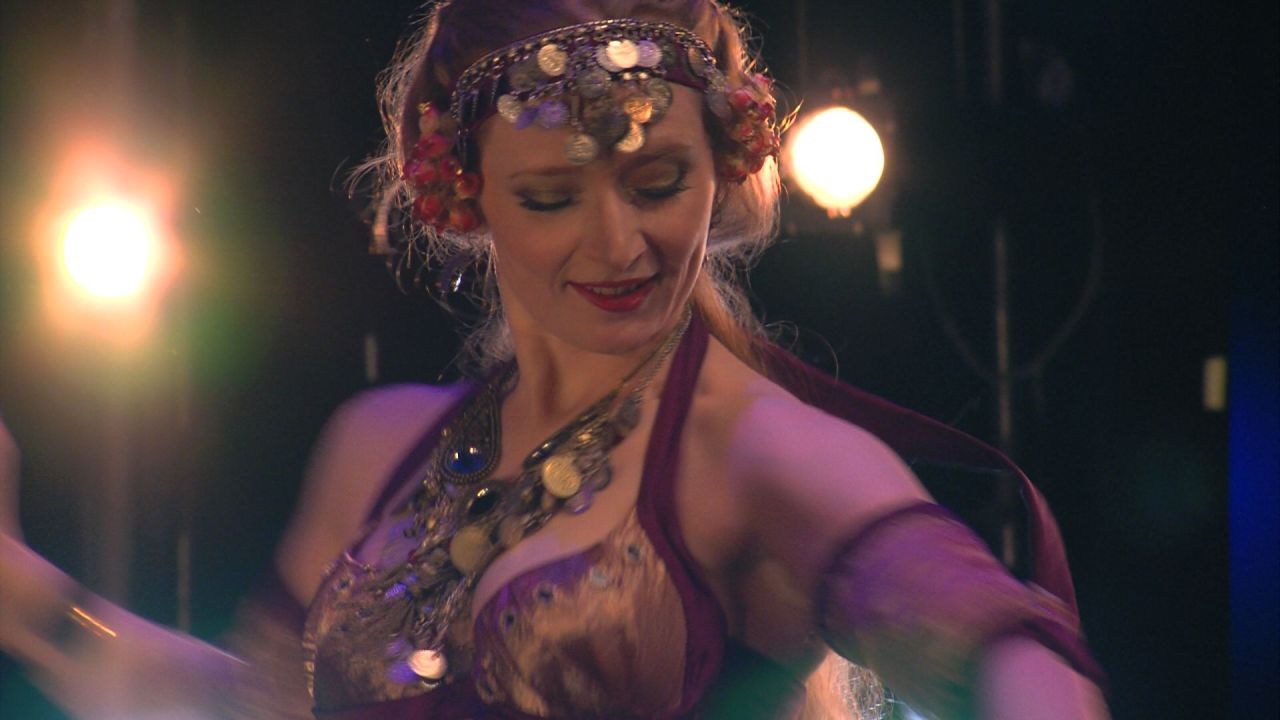
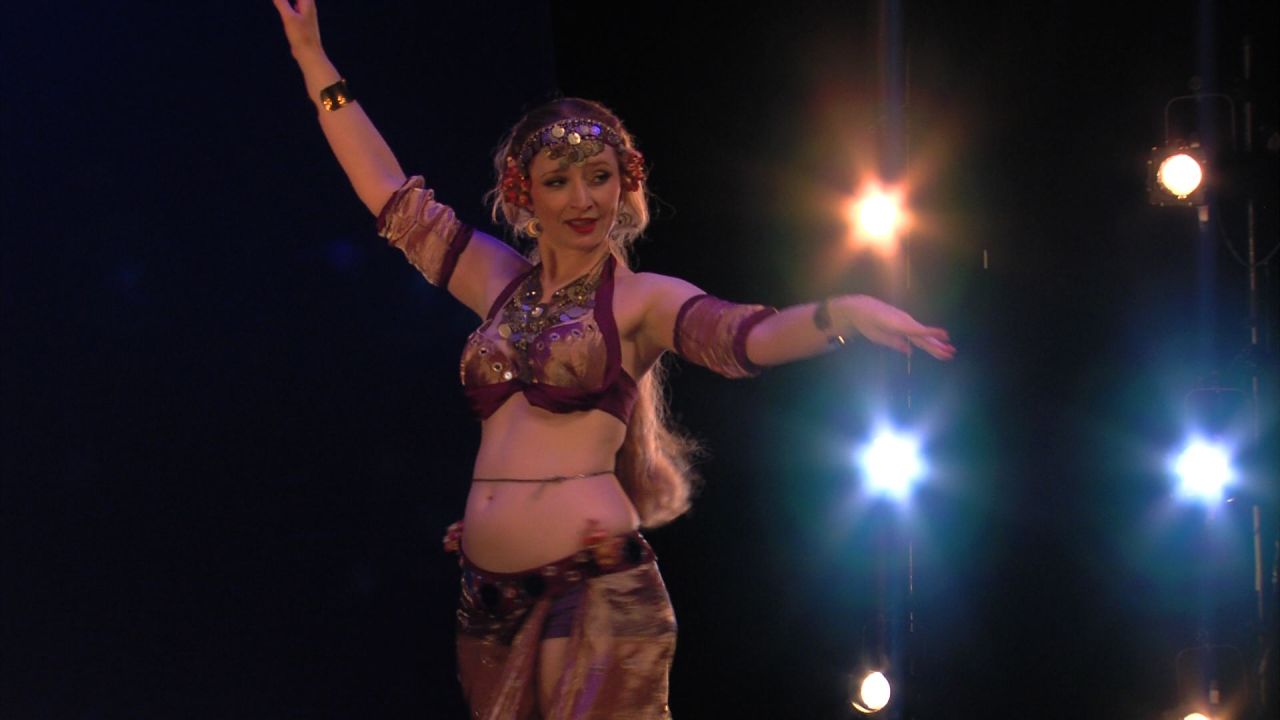
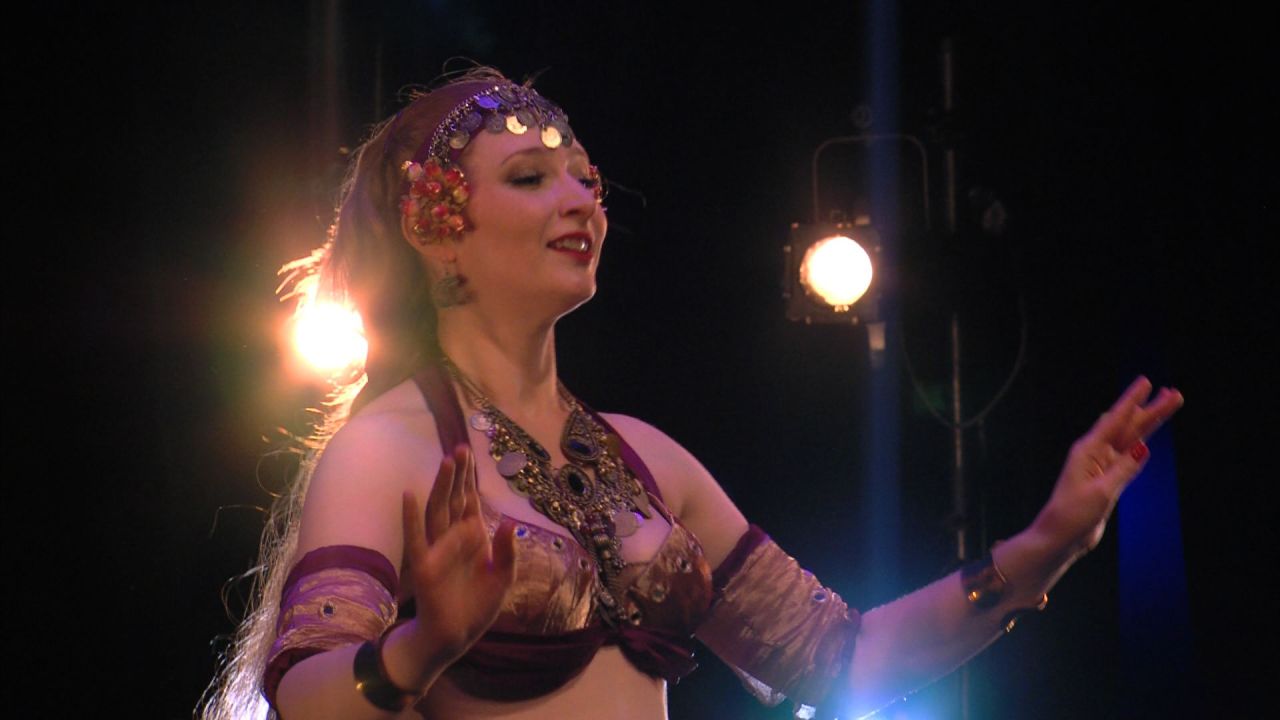
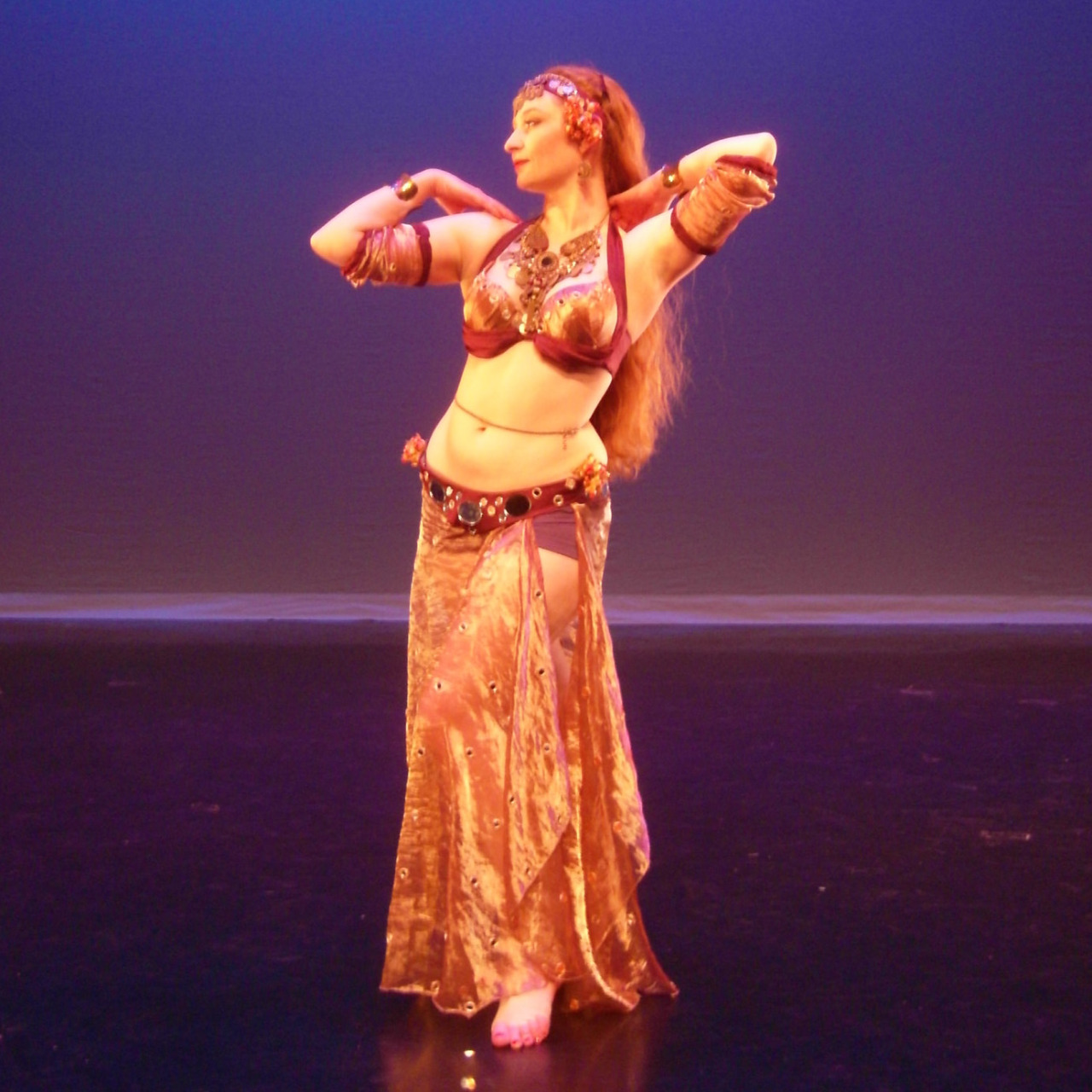
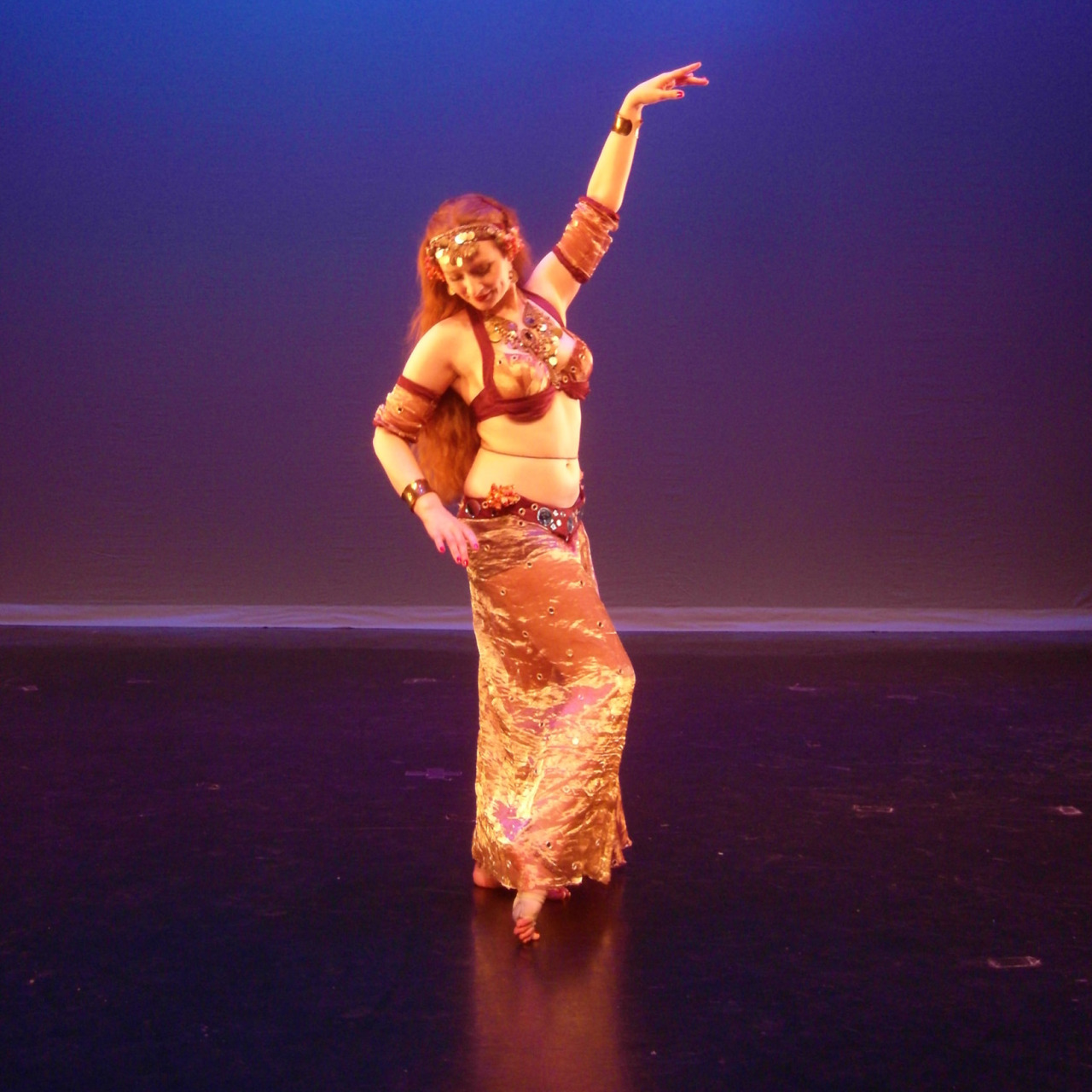
Screen shots and snapshots from the shoot:


JUNE 13, 2013 UPDATE:  Here's another performance of the same choreography:


For more information about this second clip, see http://autumnward.blogspot.com/2013/06/new-videos-of-old-dances.html

Tuesday, February 12, 2013

Re-Enchanting Belly Dance

When making small talk with people I am unlikely to see again, I often waffle, obfuscate, or even lie about my life. “I'm a housewife.” “I'm a temp.” “I'm between jobs right now.” “I'm a chemical engineer. At a box factory. Oh, specialty boxes. Very specialized actually. Uh... polymerization. Polymerized coatings. Cardboard polymerization. Well it has to do with structural variables and a proprietary folding algorithm, and, um, would you excuse me?”

When I must genuinely introduce myself, I generally stall as much as possible, but when asked directly about what I “do,” I say that I am a dance teacher, or if I think the company I'm in will not find it too pompous, a “dance artist.” Then I equivocate some more, until the dreaded revelation can no longer be put off. “I'm a belly dancer.” 

I can show you contemporary examples of this sort of thing too, by the way, but I don't want to put anyone on the spot.
And then things spin into apology and meaninglessness. “But I'm really serious. Well, no, actually I'm not exactly a 'professional dancer,' because I do more theatrical work, and it's not lucrative at all. I don't really do the kind of restaurant and party dancing that's commercially viable. Oh no, I don't mean that I do cultural presentations or theatrical folklore. I'm really not very authentic, although I hate to say that, because it sounds bad, right? Oh, sure, tribal fusion is amazing and very serious, but I don't do that either. I do my own fusion, I'm artistic, but I don't like to say that because when you hear 'fusion' or 'creative' or 'so-and-so does her own unique style' that just sounds inherently terrible to me.  And I'm not terrible. I'm really very good. I'm you know, a really good dancer who happens to be a belly dancer. But, like, a good dancer. I'm extremely technical. I sort of take it to a serious place where it's not so constrained by its traditional context or conceptual framework. But it's not technical and 'experimental' like stark and awful and soulless... I'm still making dance that's about beauty but taking it really seriously, being really serious not only about clean lines but about the musicality and the emotional expression and trying to elevate it to an artistic or even spiritual realm...”

Here's the short version that I have not yet adapted to easy conversational patter: I work in a medium dedicated to the viewer's sensual gratification, but I do not pander, and I am deeply dismayed when I am lumped in with those who do; I work in a medium with low barriers to entry but I have uncompromising standards of excellence for my own work, and I am deeply dismayed by the preponderance of people who seem unable to tell the difference.

It isn't even that I find the meretricious gambolings of my less-invested, uh, “colleagues” to be that objectionable.  Belly dance is meant to appeal to the senses, I don't apologize for its sensual nature, and I don't apologize for those who focus more narrowly on one sensual expression than another.  If your primary motivation is to get attention with a skimpy outfit and you want to gracelessly flail in it, I admire your lack of self-consciousness. If doing some nonspecific wiggling enhances your self-esteem or enriches your inner fantasy life, go, sister, go. If you make more money at the the strip club with an I Dream of Jeannie act, I congratulate you on having found a competitive advantage in a difficult line of work.  Even if your intentions are high-minded but you're really just not a very good dancer, I don't want to be a judgmental jerk.  Not everyone's good at everything.

I stumble over the words “I am a belly dancer” because it weighs on my heart to throw my pearls before swine. I consider my work worthy of respect, so I am very tired of raised eyebrows, leers, uncomfortable silences, flustered attempts to not appear closed-minded, and weird uses of “folk dancer” or “empowerment” construed as polite euphemisms. Which isn't to say that everyone's rude or poorly informed. But I don't think I've ever met anyone whose first impression wasn't colored by the assumption of some inherent frivolousness or inconsequentiality.

And I get it. I understand that, when I identify myself as a belly dancer, all you can do is evaluate the nature of my work, not the work itself. There's no reason why you would arrive at the conclusion that I am creative, thoughtful, meticulous, and highly skilled; that my dances are sophisticated compositions, not a pretense for displays of skin; that my material isn't a genre-bound rehash that depends on borrowed interest from tired stereotypes; that only by the most extreme standards would my costuming be considered salacious or would my movements be considered obscene or vulgar; that my dance aims not to provoke lust, but to charm, to fascinate, to delight.

This is why I have spent the last ten years bending over backwards (in many cases literally), trying to be seen, first and foremost, as an artist. This is why my “dance name” is my name: Autumn Ward. As a concession to befuddled speakers of English as a foreign language, I have sometimes Arabized “Autumn” to “Fatima” (get it? F-Autumn-a?) or conflated my initial, middle name, and surname, “A. Leah Ward” to “Alea al Warda,” but I've never done work that I didn't want full credit for, or that would be enhanced by being left open to one-dimensionalization. This is why I make every dance look different from the last one I created, why I spend so much time on each new piece, and can only show perhaps three new dances in a good year, and in a difficult year complete none. This is why I have a blog dedicated to the critical analysis of each of my YouTube videos. With every entry, I cringe at what I know might seem to be ridiculous self-importance, but I see that people remain oblivious to most of what I am doing until I explicitly spell it out. This is why I am increasingly reluctant to put on a bedleh, the traditional 2-piece bra-and-belt bellydance costume, and why I bristle at characterizations of my style as “cabaret.”


And this is why I've been in the habit of trying to make every posed photo an opportunity to portray myself as someone with dance training, showcasing, if nothing else, my flexibility, the carriage of my arms or the lift of my alignment.

I am bending over backwards for you, figuratively and literally, trying to be seen first and foremost as an artist.

When I see photos of belly dancers with their hands in their hair or lounging on a carpet I have a knee-jerk reaction of being NOT impressed. Certainly the publicity posters of ballet and modern companies never feature their stars luxuriously reclining—they are shown gloriously athletically in motion. By comparison, belly dancers appear to be distinguished primarily as pretty ladies who are also owners/wearers of pretty costumes. Some accomplishment.

What accomplishment is on display here?  Which dancer's portrait commands respect for her dancing?  At left, Linda Celeste Sims, at right, Mia Leimkuhler.
At least that's been my attitude about such photos recently.

But here's the thing: I like pretty costumes and pretty pictures of pretty ladies as much as anyone. And I particularly like lush images that show a softer aesthetic: classically-styled pinups, golden age Hollywood and silent film stills, the “Oriental” dancers and chorus girls of the 19th century, fantasy art, fairy tale illustrations, Mucha, Beardsley, Alma-Tadema, Waterhouse, Parrish, John R. Neill.... I cherish these images. They inspire and transport me. In fact, they affect me exactly as I hope to affect others through dance: with charm, fascination, delight.

And I appreciate that these images, like my dance, are works of creativity, thoughtfulness, and skill. With this in mind, it becomes obvious to me that a beautiful photo of a reclining dancer (or, for that matter, a nondancer in a dance costume) is an accomplishment of styling, design, vision, and craft, representing the real investment of a model and photographer, and whatever support staff they have (or may not have) behind them.

Only when viewed through a filter of snobbery is a model's prettiness, a quality that generally extends far beyond her genetics, not an accomplishment in and of itself. Posing, like dancing, is a real skill of intelligent physicality. What in the old days they rightly called the “artfulness” of one's appearance, the skillful and self-expressive creation of allure or smart style, is a talent clearly not given to all. And, speaking as someone who is not naturally slim, is not as young as she once was, and who owes her figure, skin, hair, and teeth at least as much to a lifetime of careful and disciplined choices and habits as to luck, I very well know that it takes real work to create and maintain an attractive face and body. These accomplishments are seldom vaunted or praised—our culture, while it rewards beauty, sneers at vanity—but I have no reservations about acknowledging their value.

Photographs can only hint at coordination, musicality, and fluidity—the qualities on which even the liveliest and boldest styles of belly dance rely.  Belly dancers waver, circle, spiral, and oscillate. Photos can no more capture these energies than a picture of a candle can capture the flame's flicker. The movement vocabulary of belly dance is contained, never creating the leg extensions and jumps that are the Kodak moments of Western dance. Softer styles do not “explode” on stage, but instead are virtuoso displays of subtlety. These are features, not bugs.

So what is the problem with sensually-posed belly dance photo portraiture? I have to conclude that the only problem is my double standard, that I am too wound up in my personal crusade, and that I'm ready to give it a rest. I can easily do what I ask of others, think critically, and see that the choice to primarily communicate sensuality is not in any way a shortcoming but its own legitimate expression. While some contemporary costuming trends are not to my taste, and some dancers/models lack artfulness, these are failures of content, not medium.

Offering someone the pleasure of looking at a beautiful image is not really so different from offering them the pleasure of watching a beautiful dance.  Perhaps a newcomer runs the risk of being thought not a very good dancer if her pictures emphasize something other than her dance training, but those who jump to this conclusion are unlikely to be belly dance aficionados.  Belly dance photos are not a job interview at the bank: to show sensuality is not unseemly. The fact is that beautiful images are accomplishments of joy, comfort, inspiration, and cheer. They lifts our hearts, soothe our spirits, and fire our imaginations.

Despite the value I place on work, despite the recognition I seek for my work, there's nothing appealing to me about evaluating the success of belly dance through the dour lens of a Protestant work ethic. Belly dance, above all else, is an accomplishment of mystery. Of all the reasons to dance, I can think of none more noble than undertaking belly dance as an act of re-enchanting the world.

Maybe it's time for me to get back in a bedleh. Maybe it's time for me to celebrate sensuality on its own terms and merits. I'm going to assume that at this point, if you haven't formed an opinion about my accomplishments in dance, new photos won't sway your opinion one way or the other no matter how they are posed.  The world can never have too many pretty pictures of pretty ladies.

(Did I really just work so hard on an essay about working hard to justify posting a picture of myself not working hard?  Oh yes I did.  The irony is not lost on me.)

Happy Valentine's Day.


Sunday, February 10, 2013

Interview: a Conceptual Influence from Beyond the Bellysphere

What is an example of a conceptual influence from outside belly dance? Any concept inspiration from any other area of arts or life...

[My segment begins at 5:23]


[A transcript of my segment follows below.]
 
There is a book I want to mention, a work of popular psychology, called the Highly Sensitive Person, by Elaine Aron, and her name is spelled A-R-O-N. In this book, Dr. Aron describes High Sensitivity as a relatively common personality trait—it's about 15-20% of people—and she discusses ways that people who have this trait can identify it in themselves and learn to use it constructively and regard it as an asset. When I first found out about this idea about this highly sensitive population, right away for me I made a connection to belly dance. [I suspect that a disproportionate number of people involved in belly dance have this kind of high sensitivity. ] Our dance is very emotional, very expressive, but subtle—very nuanced. Over and over again we use and we hear this phrase “poetry in motion”... We are not living in poetic times, so to have this poetic impulse, this interest in poetic movement, I think reveals a lot about the kinds of people who are drawn to this dance form.

Or maybe it just reveals a lot about me, but cultivating an appreciation for my sensitivity has been very valuable to me, and it definitely affects the way that I construct dances. As I said, we are not living in poetic times. If you look at the way we interact with technology, the way our TV and our movies have this fast short-attenion-span camera work and quick editing, the way our food and our medicine are industrialized, I think it's very easy to become accustomed to this superficial way of just passively skating along. You know, people say that this is why there's so much interest right now in zombies in popular culture, because we intuitively have this sense that there's a dark side to this quick-fix gratification, that it can degrade us. But belly dance, I think, can be an antidote to that. It has this amazing capacity to be a vehicle for poetic expression, poetic experience. It can be a doorway into the extraordinary, into this beautiful, tender, transcendent, other realm of experience. Or it doesn't have to be profound, it can also just be simple and happy and fun and joyful, but it always has, or, always has the potential to have, this extraordinary romantic quality. Working with this in mind—understanding and engaging with this poetic aspect of belly dance, I think is.. has [made] a big contribution to why my dances look the way that they do, why they have this unique look. It sounds trite to talk about heart and soul, but I don't know how else to describe it. I am dancing from my heart, through the whole thing. From the dreaming up of the ideas to the sequencing together of the choreography to the actual dancing, the actual performance. Even in the way that I kinesthetically click in, in the way that I align my body... I dance from my heart.

Thursday, February 7, 2013

Interview: What Prompts the Evolution of your Dance Style?

Filmed January 2013I know many of the readers of this blog are outside of the US.  My international fans continue to dazzle and humble me with their foreign language skills—most of you speak English better than I do—but for those who do better reading than listening or who just want to plug the whole thing into the google translator, I've also included a transcript.

What prompts the evolution of your dance style?
[My segment begins at 1:20].


Well, over the past few years I've been very fortunate in that I've had several opportunities to do nontraditional work in video and theatrical settings, so on the one hand I have been trying new things like crazy, but at the core of how I'm dancing, I'm not actually sure that my style has evolved that much. In terms of pure aesthetic, I think there's a distinct signature to the way that I move that really has stayed quite consistent across everything that I've done. I've always been very invested in training for precision, and taking care to articulate through as full of a range of motion as possible. So in all my dances no matter what the conceptual idea is, the technical qualities I think are always very consistent—there's a basic clean supple look that's always there.

If anything has changed, though, beyond style and technique, I think it is probably that the presence of my personality in my dances is more apparent now than maybe it was... What I have always loved about belly dance is its softness and subtlety, but I used to really struggle with the fact that for many audiences, at least Western audiences, in nightclub and restaurant settings, a lot of that subtlety is totally lost. So, as a result I started focusing more on prop work, fast finger cymbals, adding high-energy and acrobatic elements into my dancing... Which was a good development, to a point, because it really increased my technical range, but it was maybe not the most artistically honest direction to take my career.   I'm not a party person.  I don't have an uproarious personality.  So it was not a good choice for me to focus on these loud dances. Now I'm very much back to lyrical work, still using some of the flashier moves, but for texture, where it's contextually called for, not with the same kind of shock-and-awe, attention-demanding, approval-seeking motivation that maybe was there once.

I think we all have a tendency to devalue our natural gifts, and it was incredibly useful for me to realize, and to remind myself, that anyone can do splits and backbends and... Not anyone. Other dancers, athletically elite dancers—can do these tricks and these gimmicks—but there's really no one else who can create work that is like mine in terms of lyricism, intricacy, details, delicacy.  These [qualities] are... That's where my passion is. That's what I take pride in, that's what I want to be known for, and that is the creative imprint that I want on my work. So again it's not really an evolution because I feel like my career sort of went in a big loop and left me back doing the same things that I always wanted to do when I started out, except hopefully now with a little more polish. But, what is behind that I guess is just the desire to be honest, and perhaps having greater courage to be honest. I don't... I won't spend time on projects unless they genuinely appeal to my artistic sensibilities. Which sometimes are a little different from maybe what's in the mainstream.


Wednesday, June 6, 2012

New Clip: Oriental Dance with Floorwork and Drum Solo

This clip was filmed on May 31, 2012, at Je’Bon in New York City. My performance was part of a gala show happening in conjunction with workshops taught by Leila Molaei. Thanks to host Mark Balahadia.

Workshop Weekend

Dancers interested in learning this choreography or style: I’ll be teaching the dance shown in the video above, along with general technique and other material, on June 23 and 24 in New York City.  Earlybird rate for dancers coming on both days available through this Sunday, June 10.  Link.  (More information about the video clip follows after the flyer below.  Keep scrolling....)


Inspiration

I’ve worked a lot on nontraditional projects for the past few years, many of which, because they have taken me into previously unexplored territory, have demanded enormous amounts of time and brainpower. This new Oriental choreography was created just for the fun of doing something sweet and romantic. After the painstaking work of trying to adapt belly dance movements to nontraditional music in nontraditional dances, it was a pleasure to choreograph with music naturally suited to my dance vocabulary.

Although this is a traditional piece, it, hopefully, has a unique flavor. At the risk of alienating colleagues, I have to admit that I’m not entirely a fan of a lot of contemporary traditional belly dance. While I’m happy to see how the technical level of our community continues to improve, I’m often disappointed by a lack of softness, warmth, and imagination. So, for this piece, rather than focusing on current trends, I put tight modern steps in a context of vintage glamor and lyrical styling, aiming to evoke the fairy tale Orient of the Arabian Nights.


Style

Although I’m using a lot of Egyptian vocabulary, as always, there’s a mix of things, so this piece is best described as theatrical Oriental dance. I would not describe it as cabaret or nightclub style – it’s a fuzzy distinction, but in my opinion the choreography is too detailed and poetic to be appropriate for a boisterous venue. Because I know the provenance of vocabulary is a topic of interest to this readership; a blow-by-blow of highlights follows.

:11 Shoulder rolls: modeled after Nejla Ateş (seen, with Vincent Price, in the clip above) and Samia Gamal. My movement has a slightly different look, because I let the movement follow through into my elbows and wrists.

:20 “Lotus” hands: I don’t think I’ve ever seen an Egyptian dancer use this movement. It’s an import into contemporary belly dance from Indian dance.

:35 The pivot in this combination is led by the working hip’s arcing up, over, and back, while pulling the unweighted leg up and then dropping it into a turned-out position. This is a movement that I created and have never seen anyone else use. (It's also here at 3:00 and here at 2:47)

:36 The “tap” in this movement (following from an accent created by the lumbar spine’s releasing from a lengthened position back to neutral) is modern Egyptian. It’s used by several dancers, but I associate it with Mona Said and Raqia Hassan.

:52 After the turn upstage, there’s a series of accents on the downstage hip: front-back-in. The elbow lift that accompanies the “in” is not Egyptian – I don’t think I can claim credit for “inventing” an elbow lift, but this use of the arms is part of my personal style.

:53 Circle of the unweighted hip with the upper body counterbalancing backward: I consider this to be very much an Egyptian movement, although not one that’s particularly popular at the moment. I particularly associate this move with Soheir Zaki, but it was also used by earlier dancers in black-and-white ‘40s and ‘50s Egyptian films.

:55 3-part leg flourish: like the elbow lift, I don’t think I can claim to have invented this movement, but it’s not taken from anyone else’s vocabulary and doesn’t look to me like any particular style other than my own.

:58 Barrel turn: backbending vocabulary was certainly present in Egyptian dance as shown in ‘40s/’50s movies, and, in a new form, it seems to be creeping its way back in via Russian and Ukranian dancers, but this kind of backbending turn is far more Turkish or American Vintage than Egyptian.

:59 The accent/circle/pivot combo here is just something that I made up for this particular piece of music, but I feel very Egyptian doing it. Well, mostly Egyptian… The accent feels Egyptian; the acceleration in the circle feels like me.

1:21 – 1:35 I would characterize all the vocabulary here as Egyptian, although I think the density of melody-following detail in the choreography shows my imprint. Up to 1:28, the arm path (lift, cross behind the head, extend forward leading with the backs of the hands, push down behind the hips for the hip circle) as 100% mainstream modern Egyptian. The pull in/unfold in the transition to the undulations is a little less Egyptian, and a little more me—the difference is in the phrasing (there’s a little bit of a drag/acceleration), punctuation, and technique. I articulate more in the wrists and elbows than what’s typical of Egyptian style. After 1:30, the arms go back to Egyptian.

1:35 These double-drops are sandwiched between two gooey movements that create a lot of visual interest through the abdomen. So, for compositional purposes, to provide counterpoint, I went with a leg-driven (and, hence, non-Egyptian) double drop rather than a core-driven version. It’s also just a stylization that I like: leg-driven hipwork is one of the factors that contributes to the clean look of my dancing.

1:45 While step-lifts are common to essentially every style of belly dance, the arms, taken from the Reda-influenced theatrical folklore style, give this passage a distinctive Egyptian flavor.

2:07 – 2:40 This is another section of what I would consider to be purely Egyptian steps, but densely sequenced in a way that gives them my artistic signature. And the timing on the turns at 2:14 and 2:32 looks particularly “Autumn” to me.

2:40 – 3:38 (Floorwork) Since it was outlawed in Egypt in the 1950s, floorwork has been essentially absent in Egyptian dance. (An occasional exception is floorwork with a shamadan, a candelabrum balanced by a dancer leading a wedding procession, included to demonstrate balancing prowess.) My sequence combines a little of the flavor of floorwork from early Egyptian movies with shamadan vocabulary (like the hip bump at 3:11), rounded out with moves from contemporary and Vintage American nightclub styles. To me, the absence of more gymnastic movements imbues an Egyptian (rather than Turkish or American) aesthetic, but the dominant flavor I feel when dancing this section is just romantic theatrical fantasy.

3:46 A few years ago I would have associated this pose (arms overhead with interlocked hands) almost exclusively with vintage dancers and Turkish or Turkic influence. However, I’ve seen Egyptian dancer Randa Kamel use it several times recently, so I suppose this makes it both Egyptian and contemporary.

4:00 I often used a soft-kneed shimmy. This is not it. Here I’m using the straight-leg modern Egyptian version.

4:48 Here’s another backbend. Unlike the backbend in the unweighted hip circle at :53, the shape here comes from an arch in the spine rather than a bend in the knees, and my feet are relatively close together. I would not characterize this ending pose as either vintage or modern Egyptian – like the floorwork, I would just call it “theatrical.”

Costume

I made this costume in this video, layering embroidered and beaded eveningwear lace layered over satin. I've never seen another costume that used this construction method, which is a total mystery to me; I will definitely use this technique again. While there was still a great deal of handwork (I added the fringe and gems, and added a little more detail to the beading), using a pre-emebellished fabric gave me a much more luxurious effect than I could have achieved by hand.


The design was not copied from any costume in particular, but I chose the centered halter strap, wider belt, and dual-slit chiffon circle skirt to give the the retro feel of vintage costuming. I think this bedleh is a little subtle compared with the high-end stretch lycra and rhinestone designs that are popular right now, but I feel classy and elegant in a costume that doesn't yell so loudly.

I'm not sure where I bought the fabric (which there's no more of anyway—I bought the end of the bolt), but it was purchased somewhere in the cluster of fabric stores in the high 30s between 7th and 8th avenues in New York City. Fringe and gems from Hai Trim, 242 W. 38th St., NYC. The center accent on the bra is an earring whose mate I have lost.

Music

Through the end of the floorwork, I'm dancing to an outtake from the gloriously keyboard-free Sahar, by Setrak Sarkissian, available here. The drum solo is excerpted and edited out of the misleadingly named tracks “Saiidi Cane” and “Bindi Dance” from an Amazon mp3 collection called “Belly Dance Favorites” by the “Belly Dance Orchestra.” This is a collection of obviously re-released vinyl-era music with new and arbitrary names attached to the tracks. "Sword Dance," for instance, is "Sala Sala," from from Özel Turkbas' Alla Turca, but there are a lot I can't identify. If you know the original credit for the tracks I'm using in my drum solo, please let me know!

Video Quality

People, I hear you.  I know this is not the greatest.  My camera is pretty old, and I did a zoom/crop on the footage (the camera person was pretty far away from the stage and I'm very tiny on the original) which took the quality down even further.  I'm working on a hardware upgrade before my next upload.

Thursday, March 8, 2012

New Classes and New Blog

If you've visited this blog recently you've seen no new posts, but perhaps have noticed some new activity along the righthand margin. If you haven't yet done so, please check out naturalbeautybellydance.com, the site I've put together for my NYC (and worldwide) belly dance classes. I have been actively maintaining a blog of belly dance inspirations, and I just posted information about my Spring teaching schedule (courses for new beginners and continuing students, a workshop series for mixed levels, and a Long Island workshop--also I'm promoting "Effortless Expression," a theatrical workshop by Melissa Voodoo) .

Alternatively, if you'd prefer to follow Natural Beauty Belly Dance via Facebook, you may "like" the school here:
http://www.facebook.com/pages/Natural-Beauty-Belly-Dance/301380243251361

(My personal page is updated as irregularly as this blog, but you may also "like" me the dancer at:
http://www.facebook.com/pages/Dance-Artist-Autumn-Ward/164869153550627 )

Natural Beauty Belly Dance also has a meetup group:
http://www.meetup.com/NaturalBeautyBellyDanceNYC/

Also new is the "About Autumn" tab on this site--it's an update and adaptation of the old "about" page from AutumnWard.com.  Coming hopefully some time this year is an artist statement page and some actual new blog content....  I have new dances, just no new video of them yet.